
Navigation
Install the app
How to install the app on iOS
Follow along with the video below to see how to install our site as a web app on your home screen.
Note: This feature may not be available in some browsers.
More options
Style variation
You are using an out of date browser. It may not display this or other websites correctly.
You should upgrade or use an alternative browser.
You should upgrade or use an alternative browser.
Ah. The new lighter, faster, more accurate Sage
- Thread starter Porter2
- Start date

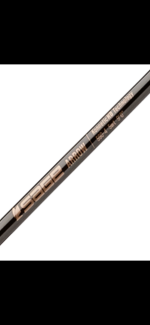
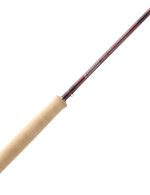


Lol. Sage taking shots at old sayings with the new mid-range rods, and Powerate sounds like a sports drink.

I’m holding out for the Sage Ai model…..
SF
SF

Alignment dots????Sage Arrow (Sonic Replacement).
View attachment 169450
Sage Power R8 (Igniter replacement).
View attachment 169460


I am sure they are good rods, but Sage kind of lost their enamor for me. I am not sure why, but I haven't bought a Sage rod for years. When I was younger that was all I used. These days I find Scott, Hardy, and Douglas are the rods I grab for most of my fishing. Although I do still take a couple of my Sage saltwater rods on flats trips when I'm lucky enough to book one.
I love my 7130 MOD
I will not support FarBank (except a Rio line or two).
Venture capital has ruined too many companies that were good.
I will not support FarBank (except a Rio line or two).
Venture capital has ruined too many companies that were good.

I do not know about others, but a higher priced rods are just out of the question.
Can I afford it ---> absolutely.
Will a fast action rod suit my style ---> no.
Will a slightly less weight rod make a difference ---> no.
Will a new rod be as sensitive as an older rod ---> no.
Will a newer rod be more prone to damage than an older rod ---> yes.
Are the warranties better on a new rod than older rods ---> only for a limited timeframe.
Will the warranties change (for the worse) on a new rod vs. an older rod - most likely.
Marketing is just trying to sell us on newer is better. IMHO BS!
Why buy a new rod when one can buy 3-4 used rods you love?
Being 'old school' is a blessing. It took a lot of schooling (and experience) to be 'old school'. I am proud of that!
Fly fishing has been around for centuries. Yet we use patterns from those times and techniques for fishing to this day. Old school is a good thing!
Can I afford it ---> absolutely.
Will a fast action rod suit my style ---> no.
Will a slightly less weight rod make a difference ---> no.
Will a new rod be as sensitive as an older rod ---> no.
Will a newer rod be more prone to damage than an older rod ---> yes.
Are the warranties better on a new rod than older rods ---> only for a limited timeframe.
Will the warranties change (for the worse) on a new rod vs. an older rod - most likely.
Marketing is just trying to sell us on newer is better. IMHO BS!
Why buy a new rod when one can buy 3-4 used rods you love?
Being 'old school' is a blessing. It took a lot of schooling (and experience) to be 'old school'. I am proud of that!
Fly fishing has been around for centuries. Yet we use patterns from those times and techniques for fishing to this day. Old school is a good thing!
Last edited:


Added weight is a no no....Alignment dots????


Question: My feeling is that Sage and Loomis led the charge for the ultrafast rod trend that many have bemoaned. Do you folks think this is more or less accurate?
It depends on the angler casting, but accuracy is not harmed by using a Scott, Loomis, Sage fly rod. Cast an Asquith rod, they are the best of the best.
PS - The best fast action fly rod models are really meant for saltwater sight fishing, and are certainly not needed for freshwater trout fishing.
Question: My feeling is that Sage and Loomis led the charge for the ultrafast rod trend that many have bemoaned. Do you folks think this is more or less accurate?
Not to say that either company didn't/doesn't make more moderate action rods or that ultrafast = bad.
Gary Loomis was at the forefront of graphite rods in the 80's. IM6 rods were produced starting in ~1983 and are moderate action for sure. My favorite rod, too. In ~1987 Loomis produced the IMX rod. The first high modulus rod/higher strain rate rod that, IMHO, started the faster action rod race continuing even today.
New materials, e.g. boron, and resins continue the trend for faster and lighter rods.
Last edited:

Yeah, I think that's about right. Fenwick produced the first graphite fly rods in 1973, followed by Fisher, who made blanks initially that were re-branded for Orvis, Winston, and Thomas & Thomas - if I recall correctly. I think Lamiglass made their own early on, and then when Loomis broke away he made them right away. Sage was making graphite out of the gate in 1979/80. So I think it's reasonable to say that Sage and Loomis led the "arms race" for fast actions as the other rod makers tooled up and began making graphite rods and the hilarity of bad products they initially produced. There's a learning curve to working with graphite after learning to make fiberglass rods.Question: My feeling is that Sage and Loomis led the charge for the ultrafast rod trend that many have bemoaned. Do you folks think this is more or less accurate?
Not to say that either company didn't/doesn't make more moderate action rods or that ultrafast = bad.
This is an interesting idea -- Is (or was) graphite inherently fast and thus the best graphite rod makers were making making very fast rods in your view? I suppose it depends on what we mean by best, but the case of something like the Scott G or Winston TMF would indicate that at least by the mid 90s (correct me if I'm wrong), good moderate rods were being made.Yeah, I think that's about right. Fenwick produced the first graphite fly rods in 1973, followed by Fisher, who made blanks initially that were re-branded for Orvis, Winston, and Thomas & Thomas - if I recall correctly. I think Lamiglass made their own early on, and then when Loomis broke away he made them right away. Sage was making graphite out of the gate in 1979/80. So I think it's reasonable to say that Sage and Loomis led the "arms race" for fast actions as the other rod makers tooled up and began making graphite rods and the hilarity of bad products they initially produced. There's a learning curve to working with graphite after learning to make fiberglass rods.
I like the idea that Loomis and Sage were using the tech well and that produced fast rods, but I also think it at some point became a conscious design philosophy. Sage and Loomis became identified as specialists in ultrafast rods, that's what their customers liked and looked to them for.

G_Smolt
Legend
I think a more accurate statement would point to the principal designers of the "ultrafast" era - Jerry Siem and Steve Rajeff.Question: My feeling is that Sage and Loomis led the charge for the ultrafast rod trend that many have bemoaned. Do you folks think this is more or less accurate?
Not to say that either company didn't/doesn't make more moderate action rods or that ultrafast = bad.
After all, Jerry designed the TCR, which was a GREAT casting rod that also doubled as a skiff pushpole...
This is an interesting idea -- Is (or was) graphite inherently fast and thus the best graphite rod makers were making making very fast rods in your view? I suppose it depends on what we mean by best, but the case of something like the Scott G or Winston TMF would indicate that at least by the mid 90s (correct me if I'm wrong), good moderate rods were being made.
I like the idea that Loomis and Sage were using the tech well and that produced fast rods, but I also think it at some point became a conscious design philosophy. Sage and Loomis became identified as specialists in ultrafast rods, that's what their customers liked and looked to them for.
Maybe it was corporate marketing that determined what the customers wanted and would be able to purchase....