Driftboat trailer - how important is a roller in the back

Burt Dagger

I’m just here so I don’t get mined
Forum Supporter
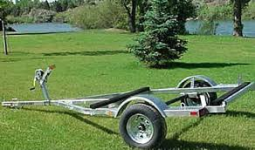
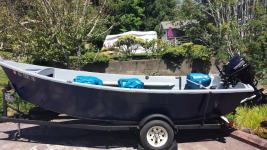
I’m thinking it’s going to be time soon to replace my old drift boat trailer. I’d like to go aluminum so that I don’t have to worry as much about occasionally putting my boat in the Sound. But being in the Puget Sound area, the aluminum options I’m seeing are typically for little skiffs, not drift boats. A main difference being the lack of a roller at the rear of the trailer to assist in loading/unloading the boat at shallow launches.
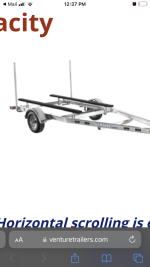
1754077466741.png

My question is - with a skiff trailer like this, what proportion of river launches would I be unable to use, given the lack of rollers? I pretty much only fish still water in this boat but would like to use it on the Yak or similar once I get my rowing skills to where they need to be.

Thanks for the advice!
 
I mainly use mine on the Deschutes River in Oregon where the trailers take a beating on the gravel roads. In that case, a welded trailer holds together. I recently replaced the roller on my 1985 trailer with electrical conduit. The old roller was solid steel and was wearing through the welded mounts on the trailer. I consider a roller very helpful for unloading and unloading the boat.
 
Nobody that has one ever wants to go back to being without one...
 
I mainly use mine on the Deschutes River in Oregon where the trailers take a beating on the gravel roads. In that case, a welded trailer holds together. I recently replaced the roller on my 1985 trailer with electrical conduit. The old roller was solid steel and was wearing through the welded mounts on the trailer. I consider a roller very helpful for unloading and unloading the boat.
I bought these bushings from Clackacraft (https://www.driftboatparts.com/product-p/rtrb.htm) and used electrical conduit and a steel rod to make a new roller. It was pretty straightforward since even I was able to do it…
 
All right, thank you for the insights! Probably the underlying problem here, other than trailer age, is that I don’t really use my drift boat as a drift boat. It’s used more as a stillwater/bay boat. And probably the real solution is to transition to a real Puget Sound boat since, let’s face it, that’s what I really want to be doing. Although I’d have to give up my ambitions to occasionally row a river. And would probably be shopping for a bottom of the barrel lightweight old aluminum v-hull situation.

Step 1 I’ll just go get the trailer serviced for the first time in a while and get a better idea of what additional longevity to expect. Then maybe it’s time to think about offloading boat + serviced trailer to raise funds for the real deal.
 
Aluminum drift boat trailers with a roller do exist, just not sure what’s available near you. Koffler in Oregon sells them.
 
drift boats have significantly more rocker than the typically transported flatter bottom boats on bunk trailers, so they depend on the hull support provided by the rear roller and forward cross member.

View attachment 162063
Yep, that was one of my big open questions for the dealer who suggested the trailer pictured in my original post. The parallel supports may have been fine, but that’s a totally different configuration than the good ol DB trailer.
 
I bought a journey boat a few years ago and just recently modified the trailer with a roller on the back allows for much easier loading and unloading especially on shallow ramps, once you have had a drift boat and trailer you really appreciate the ease of them....
 
The trailer on the first generation Clackacraft Magnum barn find that I restored into a tidewater/lower river salmon boat employed both a rear roller and bunks, on which I installed HDPE slides. That combo worked well as the Magnum is designed to get up on plane so has less rocker than a conventional drift boat. It all comes down to hull rocker. Straighter rocker hulls 'sit' on bunks whereas rockered DB hulls 'nest' in between the roller and forward cross member.
1754146300803.png
 
The trailer on the first generation Clackacraft Magnum barn find that I restored into a tidewater/lower river salmon boat employed both a rear roller and bunks, on which I installed HDPE slides. That combo worked well as the Magnum is designed to get up on plane so has less rocker than a conventional drift boat. It all comes down to hull rocker. Straighter rocker hulls 'sit' on bunks whereas rockered DB hulls 'nest' in between the roller and forward cross member.
View attachment 162101
Thanks, that’s great to know. I’ve got quite a bit of rocker, so that makes it pretty cut and dry.
 
Roller on the back is absolutely vital for a drift boat trailer unless you're only using improved ramps and floating the boat off the trailer.. even then launching a drift boat that way makes you look like a rookie... if there's no chance your boat could go shooting off the river you're not doing it right. :)
 
Back
Top