Tippet ring quality

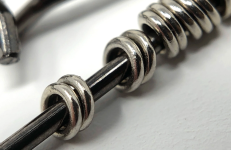
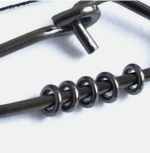
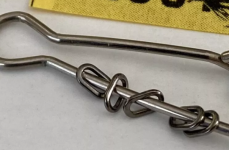
These are the ones I was having trouble with:
View attachment 141537
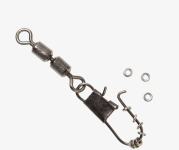
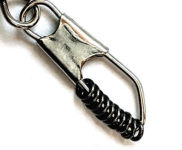
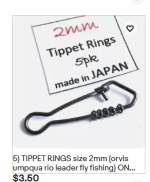
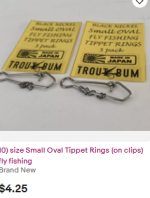
The one "tap to zoom" pic with the orange Tenkara level line is actually the old defective washers. The new Japanese rings are the pics with the real nice radiused & smooth ring.
 
Last edited:
Maybe it's my knot tying skills (or lack of) when attaching leader material to tippet rings that's causing me issues. I use an improved clinch knot on the leader and tippet connections with lots of spit to lubricate the material (nylon and fluoro)
I am using an improved clinch too. If you are not also having problems with breakage at the hook eye, it is probably not a knot issue.

But I have been practicing to quickly tie a 16-20 - Pitzen knot (along with the improved clinch) using *hemostats forceps that is reportedly stronger than the improved clinch with smaller tippet and gives a noticeable "click" when fully tight signallng that the knot wraps have seated properly. The increased strength apparently is because the tag end of the tippet is not under load so the knot doesn't slip?
 
Last edited:
Last edited:
I am using an improved clinch too. If you are not also having problems with breakage at the hook eye, it is probably not a knot issue.

But I have been practicing to quickly tie a 16-20 - Pitzen knot (along with the improved clinch) using *hemostats forceps that is reportedly stronger than the improved clinch with smaller tippet and gives a noticeable "click" when fully tight signallng that the knot wraps have seated properly. The increased strength apparently is because the tag end of the tippet is not under load so the knot doesn't slip?

Interesting knot, thanks for sharing the link.
 
Since most of us use forceps to hold the tippet ring when cinching down on whatever knot used (I use an improved clinch knot) I wonder if those experiencing break-offs are subjecting the knot to excessive force? Perhaps that force is sufficient to deform or damage the tippet material attached to the tippet ring.

With forceps securely holding the tippet ring you can easily impose a great deal of force on a short (the space between your hand and the firmly held tippet ring) and relatively isolated part of the terminal rig that is normally protected by the dynamic aspect of line and leader 'stretch' when actually fighting a fish.

As mentioned previously, I've never had a tippet break at the ring...and maybe that's because I don't go 'all gorilla' on the tippet ring knots.

I use fluoro tippet and (like most folk) use plenty of slobber (not something normal folk necessarily want to necessarily hear from a guy named krusty) to lube the knot as it's being cinched down.

Just a theory...
 
Last edited:
I have used both Rio and Orvis rings without issue.
I am all for supporting local fly shops but I've been using and buying only Tenkara stuff for trout in small creeks to midsized streams since 2018.
Nirvana Tippet Rings MIJ, 25 rings for $8 from DRAGONtail Tenkara in Chubbuck ID (y) 1739295698277.pngRio Tippet rings, 8 rings for $10???? (the washers in this factory pic look like they may cut tippet)
1739296044944.png
Orvis Tippet Rings, 10 rings for $9??? (may be the lighting but they don't look so great either)
1739296832197.png
Sorry all, no offense but HOOTS MON!!!
1739297233967.png
My inner Scotsman has already shown me that Tenkara outfits are 20% of the cost of western fly rod-reel line of equal quality-workmanship-performance (plus I catch fish following behind western fly anglers), but the little accessories too???!!! 🤑
1739297362466.jpeg
 
Since most of us use forceps to hold the tippet ring when cinching down on whatever knot used (I use an improved clinch knot) I wonder if those experiencing break-offs are subjecting the knot to excessive force? Perhaps that force is sufficient to deform or damage the tippet material attached to the tippet ring.

Just a theory...
I always keep the ring on the snap swivel while tying onto a T-line or tippet, then use the line or tippet to pull the ring off of the snap swivel.
 
It would be interesting to expand this investigation to hook eye smoothness...but since most of my trout are well under two feet in length and my few break-offs occur because I've been hooking fish all day with the same fly without checking the knot....I think I'll just keep doing what I'm doing with RIO tippet rings. At the slow rate I'm using my inventory of rings I've a lifetime supply.
 
Last edited:
But I have been practicing to quickly tie a 16-20 - Pitzen knot (along with the improved clinch) using *hemostats forceps that is reportedly stronger than the improved clinch with smaller tippet and gives a noticeable "click" when fully tight signallng that the knot wraps have seated properly. The increased strength apparently is because the tag end of the tippet is not under load so the knot doesn't slip?
Interesting knot, thanks for sharing the link.
One last thing about the Pitzen, when pulling the knot tight the "pull to 80% tight" step seems to be real important. During repeated (& repeated, repeated...) practice if it's too tight I don't feel the "click." I didn't do any empirical testing but word is if you don't feel the click, the knot can slip, period.
 
It would be interesting to expand this investigation to hook eye smoothness...but since most of my trout are well under two feet in length and my few break-offs occur because I've been hooking fish all day with the same fly without checking the knot....I think I'll just keep doing what I'm doing with RIO tippet rings.
Even a pair or 8" don't do much. But as I decorate trees or hang something with a bead up on the bottom I can count on it breaking somewhere below the ring.
 
Last edited:
I always keep the ring on the snap swivel while tying onto a T-line or tippet, then use the line or tippet to pull the ring off of the snap swivel.
I do the same with the leader butt section to extract the ring from the swivel, but hold the ring with forceps for clinch knots on the butt and the tippet.

I want to get that ring off the snap swivel and securely onto a line ASAP before I drop the whole damn thing into the drink! 😀
 
I do the same with the leader butt section to extract the ring from the swivel, but hold the ring with forceps for clinch knots on the butt and the tippet.

I want to get that ring off the snap swivel and securely onto a line ASAP before I drop the whole damn thing into the drink! 😀
Yeah, and I usually have the tippet ring tied to the line already before tying tippet onto it. AND, I usually build and pre-config my lines (plus sighter section) with a tippet rig at home on my tying bench.
 
Since most of us use forceps to hold the tippet ring when cinching down on whatever knot used (I use an improved clinch knot) I wonder if those experiencing break-offs are subjecting the knot to excessive force? Perhaps that force is sufficient to deform or damage the tippet material attached to the tippet ring.

With forceps securely holding the tippet ring you can easily impose a great deal of force on a short (the space between your hand and the firmly held tippet ring) and relatively isolated part of the terminal rig that is normally protected by the dynamic aspect of line and leader 'stretch' when actually fighting a fish.

As mentioned previously, I've never had a tippet break at the ring...and maybe that's because I don't go 'all gorilla' on the tippet ring knots.

I use fluoro tippet and (like most folk) use plenty of slobber (not something normal folk necessarily want to necessarily hear from a guy named krusty) to lube the knot as it's being cinched down.

Just a theory...
knot tests have demonstrated that insufficient lube and too fast of a knot close = loss of rated breaking strength in the tippet run underneath the knot, especially with flouro which 'heats up' faster than mono.
When fishing are breaking surface on dries, however, and have just broken off on one, it's impossible to tie on the next fly fast enough...lol
 
highly recommend skagitanglers on ebay for tippet rings (and way too much other good stuff).

1739301395805.png
1739301693675.png
1739302350296.png
1739303055545.png
Good stuff, MIJ, well made... but
1739303147040.png
 
It would be interesting to expand this investigation to hook eye smoothness...but since most of my trout are well under two feet in length and my few break-offs occur because I've been hooking fish all day with the same fly without checking the knot....I think I'll just keep doing what I'm doing with RIO tippet rings. At the slow rate I'm using my inventory of rings I've a lifetime supply.
Yup, good point! For fixed line fishing it's nice to have a couple of lines for each of the lengths of the rods I fish to accomodate various conditions; stream size, fish size expected, windy/calm conditions, room to cast and set the hook, unweighted vs weighted flies. I have 7 rods and all but one fish at double or triple zoom lengths.

Lost tippet, flies, and fish because of poor quality rings can be real irritating and isn't good for the environment and wildlife either. So even though there are several length duplications in my rod collection, being able to buy 25 top quality 2mm, and 3mm tippet rings for $8 + shipping is VERY NICE!

I also use tippet rings to attach tippet with a western rod-reel-line-leader for lakes and Puget Sound and have landed fat 22" Trips and a 30" Chum with a tippet ring in the terminal tackle.

OK, 🤐
 
Very interesting, useful stuff. Thanks to all for taking the time to share. I want to learn that Pitzen knot.
 
I picked these up on the auction site. I thought I was nuts and somehow couldn’t tie an improved clinch to save my life. I kept breaking off at the slightest snag or decent fish… Nope, just shitty jagged tippet rings cutting my tippet.

Do NOT recommend.
 

Attachments

  • IMG_3924.jpeg
    IMG_3924.jpeg
    461.9 KB · Views: 7
Back
Top