PART 1: First Footsteps – Dar es Salaam to the Kilombero Valley
@dylanrose.photo @flywatertravel
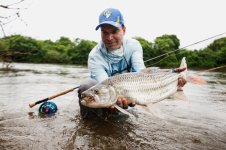
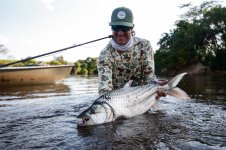
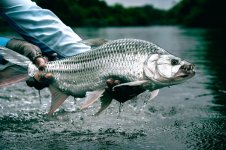
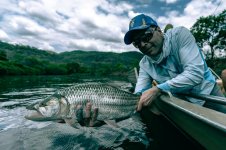
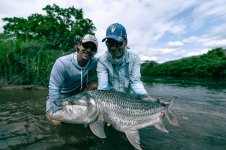
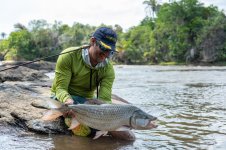
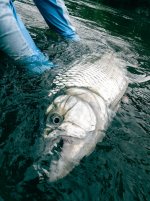
Blue Tigerfish (Hydrocynus tanzaniae) from the Ruhudji River, Tanzania
German East Africa, Tanganyika, … Tanzania. Years ago, my mom asked me to go to the theater with her to watch the film “Mountains of the Moon” about the legendary journey of Captain Richard Francis Burton and John Hanning Speke to find the source of the White Nile. Their perilous trek into unmapped central Africa hooked my imagination, as did the notion that some people lived free of society’s conventions in pursuit of fantastic challenges. My long overdue first journey into east Africa would be centered around piscatorial rather than geographical pursuits. 166 years after the Burton-Speke expedition, watersheds are still being mapped by scientists such as Dr. Steve Boyes and new fly fishing opportunities are being discovered across the enormous African continent. Our group hoped to encounter the fearsome tigerfish on a wilderness river system in the Kilombero Valley where they are protected and thriving.
Zanzibar was the starting point of the 19th century European exploratory expeditions into the interior of east Africa, and it was fitting that my flight touched down here first. Modern travel moves too fast. There is no time to acclimatize to equatorial latitudes and distant time zones. Instead of spending months in Stone Town conversing with Arab traders, learning Swahili, and assembling supplies for a long caravan journey, my short lay-over provided just enough time to swallow an anti-malarial pill and stretch my legs.
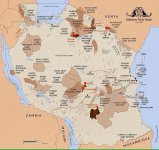
Zanzibar, Dar es Salaam, and the Kilombero Valley
We arrived at Dar es Salaam late in the evening. The 2024 U.S. elections had just concluded, and after the immigration officer inspected my documents, he gave me a big grin. “Hahaha! He’s back! Are you happy sir?” I shrugged, “Yes, he’s back” and smiled when he stamped the passport page. The car journey to the Masaki district on the Dar es Salaam waterfront was the usual terrifying series of near collisions, honking horns and urban chaos you expect from a large vibrant African city. The cooler nighttime temperatures brought out the people to socialize, eat, and tip back a few Kili’s on the beachfront. Masaki is one of the nicer parts of Dar es Salaam and is home to consulates, embassies, and developmental agency headquarters. Al-Qaeda blew up the U.S. embassy in Dar es Salaam and Nairobi back in 1998, and even now the security at hotels commonly used by foreigners is high, including vehicle inspections and metal detectors. Once checked into my room, sleep overwhelmed me immediately.
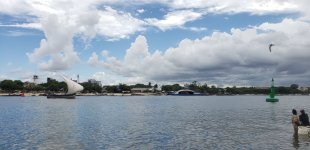
Dar es Salaam waterfront at the entrance to the main harbor. A traditional dhow sails past the Kigamboni ferry.
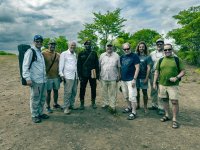
Next morning, I socialized with members of our fishing group at an outdoor café perched on a cliff above the clear blue Indian Ocean. A waiter stalked around the tables with a sling shot he used to scare away crows that craftily launch raids onto any plate of unattended food. Fishermen in the waters below hauled their nets into long wooden boats thrashing with the morning’s catch. Many giant cargo ships were anchored offshore waiting to enter the busy Dar es Salaam harbor. My fishing and travel partner, Dylan Rose, was the leader and five other experienced anglers from Oregon, Washington, Colorado, and Indiana rounded out the team. Dylan and I had eagerly planned a second trip to Africa since returning home from Gabon in late 2022. This time the focus would be fly fishing for tigerfish, one of the most iconic freshwater gamefish in Africa. We eagerly speculated on what it would be like to battle our first tigerfish with its savage sharp teeth and violent jumps.
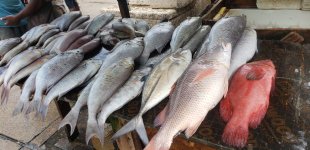
A selection of local fish for sale at the Mzizima fish market.
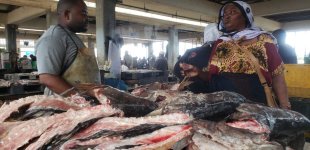
It takes time and hard bargaining before the shillings are handed over to the fish seller.
To pass the day, a few of us walked along the Masaki waterfront and later visited the bustling Mzizima fish market. The variety of fresh and long since dead fish, crustacean, and mollusk species was impressive. This was the only fish market I’ve seen that doesn’t use ice to preserve the catch, and the cloud of putrid odors swirling under the tropical sun cannot be described. Still, the fish on display gave me a good sense for what fish species are still available in the Indian Ocean waters near such a large urban area. The haggling skills of the fish vendors was also impressive. First you were herded into an area where the catch was carefully displayed from all angles and then a high pressure sales pitch in Swahili commenced. The market had a tourist handler to translate for us and collect a cash tip to share with the vendors, so our lack of buying was tolerated. On the beach at the fringe of the market old wooden dhows lazily sailed into the bay, an echo from the past. Boats just like these shuttled Burton and Speke’s party from Zanzibar to Bagamoyo at the start of their expedition. Exhausted fisherman and their families congregated at their traditional hollowed-out log fishing boats to repair gear and rest in the shade to escape the afternoon’s heat.
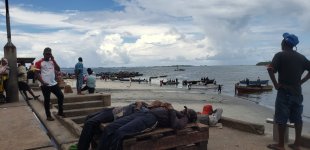
Fishermen napping in the afternoon after delivering the day’s catch to market.
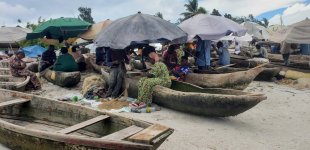
Wives and family members help to mend the fishing nets.
In the evening the restaurants were packed with residents, politicians, and businesspeople from across Africa, India, China, the Middle East, Europe and North America. Menus included local specialties and a foreign traveler’s favorites from across the globe at low prices. The streets were packed with people shopping or cruising up and down the strip in motorbikes and cars with crackle-pop exhausts. Towering Maasai men dressed in traditional garb worked at tourist funnels and hotel entrances, making an awkward living far from their home villages. Much has changed here since the Zanzibar sultans ruled the east Africa coast in Burton’s day. Tomorrow we would travel back in time to an African landscape little changed since the 1800s.
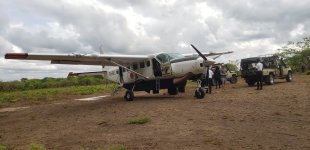
The dirt landing strip near the Mnyera River, Kilombero Valley
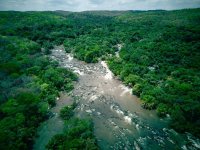
In the morning, we rushed to catch our flight to the Kilombero Valley, excited to resume the journey. The small Coastal Air charter aircraft flew ~2 hours to the south and west of Dar es Salaam towards a dirt airstrip somewhere in the Kilombero Valley. We flew over vast stretches of green forest and scrubland occasionally marked by the dirt tracks of a tiny village, small town, or muddy reservoir. The Kilombero Valley itself is abundant with water, and the inhabited eastern portion has visible signs of rice farming and other cultivation. The upper portion of the valley is wilderness scrub forest (miombo woodlands) with rock outcroppings on the higher ground and abundant green marshy wetlands in the lower areas near the rivers. The airplane descended in alignment with a narrow patch of brown soil and we arrived in a swirling cloud of dust.
@dylanrose.photo @flywatertravel
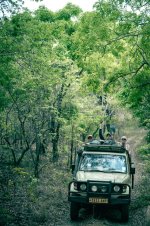
The Toyota Land Cruiser is way to get around in the African bush.
The Kilombero is not the open grassland and acacia tree safari country of the Serengeti to the north. Wildlife is present here in abundance but is less visible due to the cover of tall grasses, shrubs, and trees. We had arrived in an area where the professional big game hunter is still boss, a place where modern day Hemingways come to experience the thrill of tracking trophy specimens with a gun instead of a camera. Three different hunting blocks leased by the government to Kilombero North Safaris comprise 14,000 square kilometers of undisturbed wilderness. The region has the largest population of Cape buffalo in all of Tanzania. Lion, leopard, hippopotamus, and Nile crocodiles are also abundant here. African Waters runs a 10 week tigerfish focused fly fishing operation on the Ruhudji and Mnyera Rivers within these hunting lands during the dry season from late August to early November. The parallel operations simplify logistics and protects the fish population from poaching pressure.
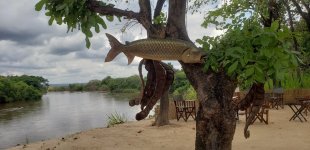
Mnyera River fishing camp and tigerfish mascot
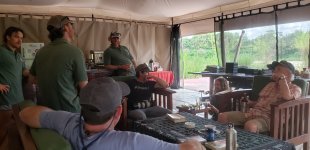
African Waters guides (green shirts left to right) Riley, Blaede, Kyle, and David (seated tying flies) at the main Mnyera River camp
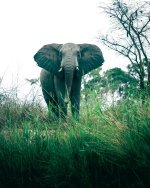
At the airstrip we jumped into a pair of rugged tan Toyota Land Cruisers and drove 30 minutes overland to the main fishing camp on the Mnyera River. Three of our group stayed here to fish for the first half of the week. The rest of us grabbed a cold Kili and continued onwards to the Ruhudji River camp. Wildlife viewing during this 2 hour transfer was a big bonus. Shortly into our drive, a small herd of elephants with young blocked the road and an overly protective female bluff charged the truck. Fortunately, our driver had skill driving in reverse on rutted dirt roads! A boar warthog briefly trotted after the truck to drive us from its territory. A Lichtenstein’s hartebeest stared at us with its bizarrely elongated head from the security of the forest edge. Bouncing through the brush, a diminutive common duiker antelope hopped away as we approached. Several times we observed groups of waterbuck, a large species of antelope, calmly watching us pass by.
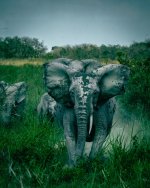
@dylanrose.photo @flywatertravel
An angry mother savanna elephant bluff charges the truck.
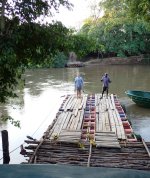
Carefully driving the truck onto the ferry at the Mnyera River
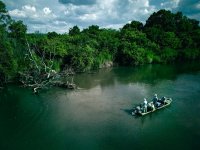
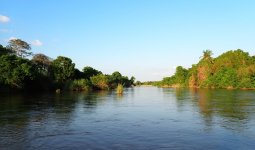
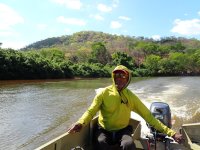
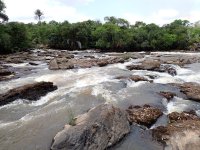
The ferry crossing the mighty Mnyera River was a marvel in bush engineering. Driving onto the steel oil drum and timber ferry was a leap of faith. This contraption was ridiculously flimsy looking at first sight. A thin steel cable anchored on both riverbanks guided the ferry on its journey while a simple motorboat powered it across the muddy current. Once across the Mnyera, the track meandered on through scrub forest, gaining elevation up to a granite domed ridge separating the two river valleys. At the summit the truck tires were mauled by sharp rock eroded from a thick vein of white quartz. We paused at a small encampment with communication equipment protected from poachers by two Kilombero Safari men. They happily received a half bag of rice and the barbequed hindquarter of some animal for the evening’s meal. At last, we reached the banks of the Ruhudji River, where we waived goodbye to the truck and climbed aboard two heavy duty 18 foot aluminum river boats. The Tanzanian boatmen motored us upstream into a golden setting sun that illuminated the spreading branches and hanging fruit of magnificent sausage trees. The familiar village weaver bird nest colonies hung from the reeds over the river and an African fish eagle flew overhead. This is Africa!
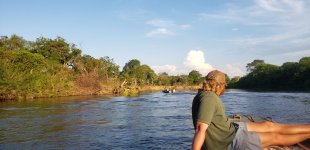
Motoring upstream on the Ruhudji River to camp
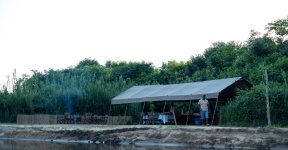
The Ruhudji River tent camp
64 hours after leaving Seattle, we finally reached the Ruhudji fishing camp. The camp staff sang and clapped a warm welcome as the boats beached onto shore. We hurriedly unpacked gear and worked with guides Kyle and Riley to rig up our fly rods before the sun disappeared. After a quick dinner we retreated into our tents for a badly needed shower and sleep. But sleep doesn’t come easily in an unfamiliar environment like the Kilombero with its cacophony of nocturnal insect and animal noises. Tree frogs, crickets, and cicadas trilled all night, a plethora of species taking its turn in succession. The hippos roamed up and down the river bellowing and thrashing in the water. Fish and crocodiles constantly splashed near the riverbank below my tent. One night a pride of lions periodically roared in the distance. The sound of soft footsteps in the leaf litter gripped my semi-conscious attention, it could be leopard or bird or a rat for all I knew. Around 5am the birds began singing, building into a full orchestra by 5:30. Different and louder species of tree frogs incessantly squeaked out calls worse than any alarm clock. Elephants sometimes ghosted into camp at night to browse nearby trees and shrubs, making low guttural sounds. Finally, just before 6am the flies above the tent started swarming with a dull buzz. Sunrise then faintly appeared through the tent mesh and a human voice outside announced “Good morning!” It was time to fish.
Continues... Post #26
@dylanrose.photo @flywatertravel
Blue Tigerfish (Hydrocynus tanzaniae) from the Ruhudji River, Tanzania
German East Africa, Tanganyika, … Tanzania. Years ago, my mom asked me to go to the theater with her to watch the film “Mountains of the Moon” about the legendary journey of Captain Richard Francis Burton and John Hanning Speke to find the source of the White Nile. Their perilous trek into unmapped central Africa hooked my imagination, as did the notion that some people lived free of society’s conventions in pursuit of fantastic challenges. My long overdue first journey into east Africa would be centered around piscatorial rather than geographical pursuits. 166 years after the Burton-Speke expedition, watersheds are still being mapped by scientists such as Dr. Steve Boyes and new fly fishing opportunities are being discovered across the enormous African continent. Our group hoped to encounter the fearsome tigerfish on a wilderness river system in the Kilombero Valley where they are protected and thriving.
Zanzibar was the starting point of the 19th century European exploratory expeditions into the interior of east Africa, and it was fitting that my flight touched down here first. Modern travel moves too fast. There is no time to acclimatize to equatorial latitudes and distant time zones. Instead of spending months in Stone Town conversing with Arab traders, learning Swahili, and assembling supplies for a long caravan journey, my short lay-over provided just enough time to swallow an anti-malarial pill and stretch my legs.
Zanzibar, Dar es Salaam, and the Kilombero Valley
We arrived at Dar es Salaam late in the evening. The 2024 U.S. elections had just concluded, and after the immigration officer inspected my documents, he gave me a big grin. “Hahaha! He’s back! Are you happy sir?” I shrugged, “Yes, he’s back” and smiled when he stamped the passport page. The car journey to the Masaki district on the Dar es Salaam waterfront was the usual terrifying series of near collisions, honking horns and urban chaos you expect from a large vibrant African city. The cooler nighttime temperatures brought out the people to socialize, eat, and tip back a few Kili’s on the beachfront. Masaki is one of the nicer parts of Dar es Salaam and is home to consulates, embassies, and developmental agency headquarters. Al-Qaeda blew up the U.S. embassy in Dar es Salaam and Nairobi back in 1998, and even now the security at hotels commonly used by foreigners is high, including vehicle inspections and metal detectors. Once checked into my room, sleep overwhelmed me immediately.
Dar es Salaam waterfront at the entrance to the main harbor. A traditional dhow sails past the Kigamboni ferry.
Next morning, I socialized with members of our fishing group at an outdoor café perched on a cliff above the clear blue Indian Ocean. A waiter stalked around the tables with a sling shot he used to scare away crows that craftily launch raids onto any plate of unattended food. Fishermen in the waters below hauled their nets into long wooden boats thrashing with the morning’s catch. Many giant cargo ships were anchored offshore waiting to enter the busy Dar es Salaam harbor. My fishing and travel partner, Dylan Rose, was the leader and five other experienced anglers from Oregon, Washington, Colorado, and Indiana rounded out the team. Dylan and I had eagerly planned a second trip to Africa since returning home from Gabon in late 2022. This time the focus would be fly fishing for tigerfish, one of the most iconic freshwater gamefish in Africa. We eagerly speculated on what it would be like to battle our first tigerfish with its savage sharp teeth and violent jumps.
A selection of local fish for sale at the Mzizima fish market.
It takes time and hard bargaining before the shillings are handed over to the fish seller.
To pass the day, a few of us walked along the Masaki waterfront and later visited the bustling Mzizima fish market. The variety of fresh and long since dead fish, crustacean, and mollusk species was impressive. This was the only fish market I’ve seen that doesn’t use ice to preserve the catch, and the cloud of putrid odors swirling under the tropical sun cannot be described. Still, the fish on display gave me a good sense for what fish species are still available in the Indian Ocean waters near such a large urban area. The haggling skills of the fish vendors was also impressive. First you were herded into an area where the catch was carefully displayed from all angles and then a high pressure sales pitch in Swahili commenced. The market had a tourist handler to translate for us and collect a cash tip to share with the vendors, so our lack of buying was tolerated. On the beach at the fringe of the market old wooden dhows lazily sailed into the bay, an echo from the past. Boats just like these shuttled Burton and Speke’s party from Zanzibar to Bagamoyo at the start of their expedition. Exhausted fisherman and their families congregated at their traditional hollowed-out log fishing boats to repair gear and rest in the shade to escape the afternoon’s heat.
Fishermen napping in the afternoon after delivering the day’s catch to market.
Wives and family members help to mend the fishing nets.
In the evening the restaurants were packed with residents, politicians, and businesspeople from across Africa, India, China, the Middle East, Europe and North America. Menus included local specialties and a foreign traveler’s favorites from across the globe at low prices. The streets were packed with people shopping or cruising up and down the strip in motorbikes and cars with crackle-pop exhausts. Towering Maasai men dressed in traditional garb worked at tourist funnels and hotel entrances, making an awkward living far from their home villages. Much has changed here since the Zanzibar sultans ruled the east Africa coast in Burton’s day. Tomorrow we would travel back in time to an African landscape little changed since the 1800s.
The dirt landing strip near the Mnyera River, Kilombero Valley
In the morning, we rushed to catch our flight to the Kilombero Valley, excited to resume the journey. The small Coastal Air charter aircraft flew ~2 hours to the south and west of Dar es Salaam towards a dirt airstrip somewhere in the Kilombero Valley. We flew over vast stretches of green forest and scrubland occasionally marked by the dirt tracks of a tiny village, small town, or muddy reservoir. The Kilombero Valley itself is abundant with water, and the inhabited eastern portion has visible signs of rice farming and other cultivation. The upper portion of the valley is wilderness scrub forest (miombo woodlands) with rock outcroppings on the higher ground and abundant green marshy wetlands in the lower areas near the rivers. The airplane descended in alignment with a narrow patch of brown soil and we arrived in a swirling cloud of dust.
@dylanrose.photo @flywatertravel
The Toyota Land Cruiser is way to get around in the African bush.
The Kilombero is not the open grassland and acacia tree safari country of the Serengeti to the north. Wildlife is present here in abundance but is less visible due to the cover of tall grasses, shrubs, and trees. We had arrived in an area where the professional big game hunter is still boss, a place where modern day Hemingways come to experience the thrill of tracking trophy specimens with a gun instead of a camera. Three different hunting blocks leased by the government to Kilombero North Safaris comprise 14,000 square kilometers of undisturbed wilderness. The region has the largest population of Cape buffalo in all of Tanzania. Lion, leopard, hippopotamus, and Nile crocodiles are also abundant here. African Waters runs a 10 week tigerfish focused fly fishing operation on the Ruhudji and Mnyera Rivers within these hunting lands during the dry season from late August to early November. The parallel operations simplify logistics and protects the fish population from poaching pressure.
Mnyera River fishing camp and tigerfish mascot
African Waters guides (green shirts left to right) Riley, Blaede, Kyle, and David (seated tying flies) at the main Mnyera River camp
At the airstrip we jumped into a pair of rugged tan Toyota Land Cruisers and drove 30 minutes overland to the main fishing camp on the Mnyera River. Three of our group stayed here to fish for the first half of the week. The rest of us grabbed a cold Kili and continued onwards to the Ruhudji River camp. Wildlife viewing during this 2 hour transfer was a big bonus. Shortly into our drive, a small herd of elephants with young blocked the road and an overly protective female bluff charged the truck. Fortunately, our driver had skill driving in reverse on rutted dirt roads! A boar warthog briefly trotted after the truck to drive us from its territory. A Lichtenstein’s hartebeest stared at us with its bizarrely elongated head from the security of the forest edge. Bouncing through the brush, a diminutive common duiker antelope hopped away as we approached. Several times we observed groups of waterbuck, a large species of antelope, calmly watching us pass by.
@dylanrose.photo @flywatertravel
An angry mother savanna elephant bluff charges the truck.
Carefully driving the truck onto the ferry at the Mnyera River
The ferry crossing the mighty Mnyera River was a marvel in bush engineering. Driving onto the steel oil drum and timber ferry was a leap of faith. This contraption was ridiculously flimsy looking at first sight. A thin steel cable anchored on both riverbanks guided the ferry on its journey while a simple motorboat powered it across the muddy current. Once across the Mnyera, the track meandered on through scrub forest, gaining elevation up to a granite domed ridge separating the two river valleys. At the summit the truck tires were mauled by sharp rock eroded from a thick vein of white quartz. We paused at a small encampment with communication equipment protected from poachers by two Kilombero Safari men. They happily received a half bag of rice and the barbequed hindquarter of some animal for the evening’s meal. At last, we reached the banks of the Ruhudji River, where we waived goodbye to the truck and climbed aboard two heavy duty 18 foot aluminum river boats. The Tanzanian boatmen motored us upstream into a golden setting sun that illuminated the spreading branches and hanging fruit of magnificent sausage trees. The familiar village weaver bird nest colonies hung from the reeds over the river and an African fish eagle flew overhead. This is Africa!
Motoring upstream on the Ruhudji River to camp
The Ruhudji River tent camp
64 hours after leaving Seattle, we finally reached the Ruhudji fishing camp. The camp staff sang and clapped a warm welcome as the boats beached onto shore. We hurriedly unpacked gear and worked with guides Kyle and Riley to rig up our fly rods before the sun disappeared. After a quick dinner we retreated into our tents for a badly needed shower and sleep. But sleep doesn’t come easily in an unfamiliar environment like the Kilombero with its cacophony of nocturnal insect and animal noises. Tree frogs, crickets, and cicadas trilled all night, a plethora of species taking its turn in succession. The hippos roamed up and down the river bellowing and thrashing in the water. Fish and crocodiles constantly splashed near the riverbank below my tent. One night a pride of lions periodically roared in the distance. The sound of soft footsteps in the leaf litter gripped my semi-conscious attention, it could be leopard or bird or a rat for all I knew. Around 5am the birds began singing, building into a full orchestra by 5:30. Different and louder species of tree frogs incessantly squeaked out calls worse than any alarm clock. Elephants sometimes ghosted into camp at night to browse nearby trees and shrubs, making low guttural sounds. Finally, just before 6am the flies above the tent started swarming with a dull buzz. Sunrise then faintly appeared through the tent mesh and a human voice outside announced “Good morning!” It was time to fish.
Continues... Post #26
Last edited: