
Navigation
Install the app
How to install the app on iOS
Follow along with the video below to see how to install our site as a web app on your home screen.
Note: This feature may not be available in some browsers.
More options
Style variation
You are using an out of date browser. It may not display this or other websites correctly.
You should upgrade or use an alternative browser.
You should upgrade or use an alternative browser.
Got any bird pics?
- Thread starter Wadin' Boot
- Start date


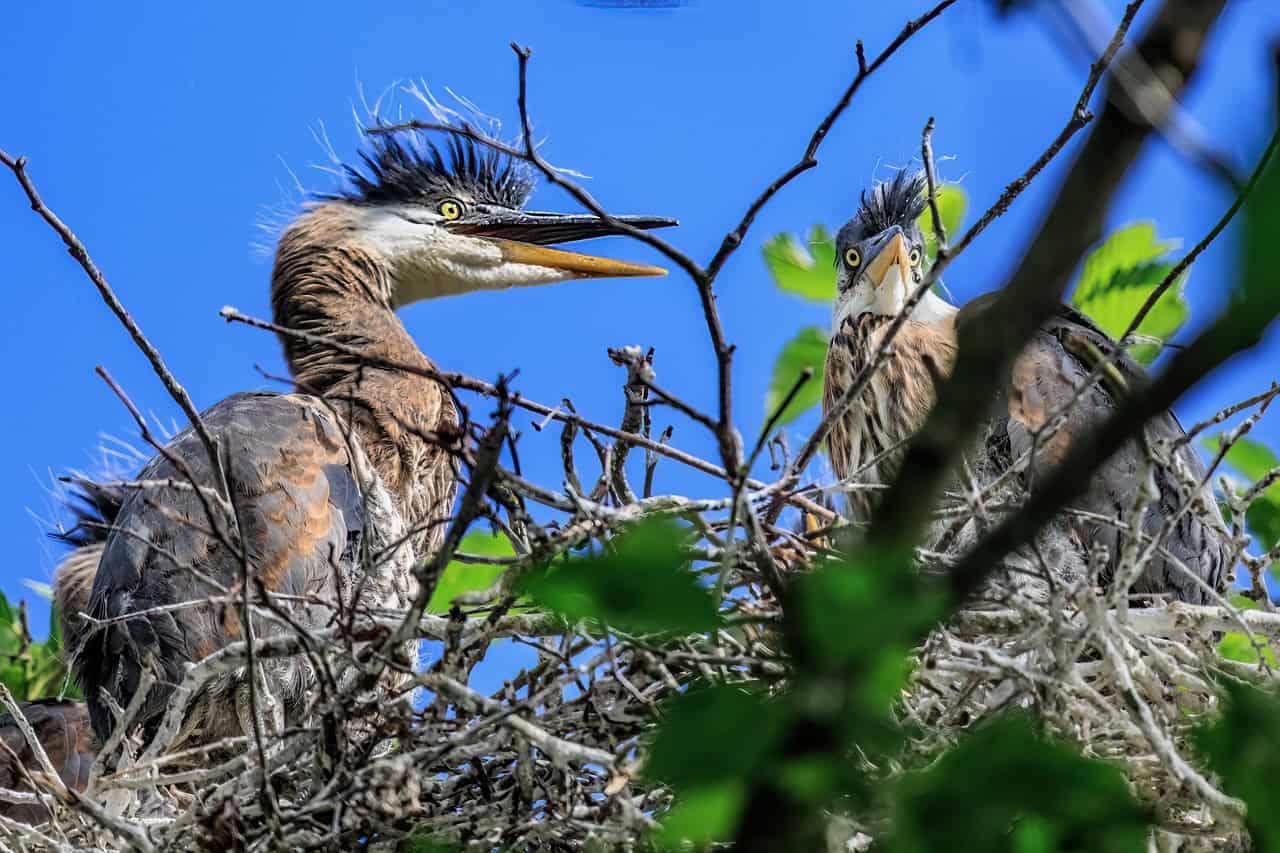
Ballard Locks heron colony booms in 2023, with 160 juveniles successfully leaving the nest
The local heron colony at Commodore Park had another great nesting season: It broke last year’s impressive record with 160 juveniles fledged. The volunteer program Heron Habitat Helpers (HHH)…
 www.myballard.com

Bass-O-Matic
Life of the Party
Bass-O-Matic
Life of the Party
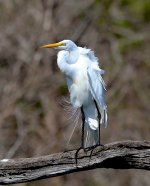
Great light on the GBH.
Bass-O-Matic
Life of the Party


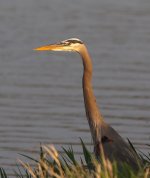
It's like alpenglow on a heron, wonderful shot @Bass-O-Matic !Great light on the GBH.
I only wish I could come close to taking pictures like some of you do. I just don't have the equipment.
One of my favorite bird showed up at our local beach today - harlequin duck. Incredible coloration on the males. The female nests on mountain stream & creeks.
One of my favorite bird showed up at our local beach today - harlequin duck. Incredible coloration on the males. The female nests on mountain stream & creeks.

Nisqually Wildlife Refuge, December 2023. Part 1 of 5
I saw five bald eagles, four adults and one subadult, in my last visit to Nisqually Wildlife Refuge.
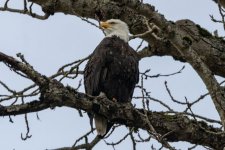
With Nisqually’s ponds, canals, and marshes topped up by the recent rains, its dense concentration of waterfowl creates a rich hunting ground for eagles. So, the cackling geese and ducks are VERY wary and burst into flight at the slightest sign of an eagle soaring overhead.
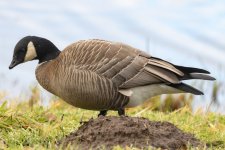
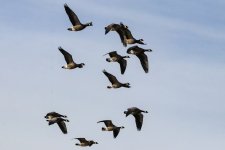 But the geese and ducks need to land soon to continue feeding.
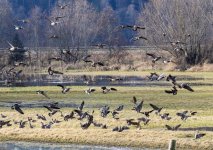
The Canada geese are wary too.
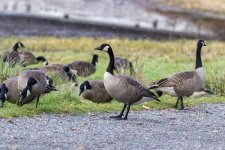
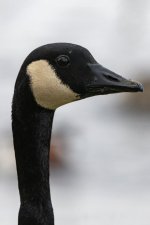
But they appear to be too big of a meal for an eagle, especially with so many bite-size morsels around. The Canada geese tend to hold their ground when an eagle passes by.
Many mammal species consume foliage = folivores. But the energy contained in plant foliage is very hard to access. To digest cellulose efficiently, mammals have evolved elaborate structures that serve as homes for symbiotic bacteria that produce celluloses. These structures include a rumen (= multi-chambered stomach of a cow, deer, or sheep) or an enlarged cecum (blind sack at the start of the large intestine). Repeated chewing by grinding molars increases the surface area of the ingested plant material and speeds the rate of digestion. The mammals consume the easy-to-digest bacteria or the by-products of bacterial fermentation of foliage. Still, it takes time to digest foliage efficiently.
But flying requires a light body mass and that constrains the abilities of most birds to evolve these elaborate digestive structures or to fly around large masses of slowly-digesting plant material. Large flightless birds, such as ostriches and rheas, are less constrained and consume more plant material. But geese, swans, and some ducks are major herbivores and excellent fliers.
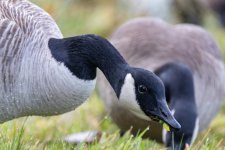
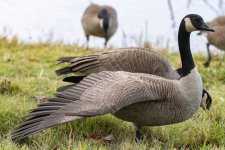
How do these waterfowl do it? First, like many birds, they consume gravel and sand (aka, grit or gastroliths) which combines with the plant fibers in the muscular gizzard.
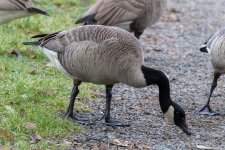
Contraction of these muscles power pebbles and sand rip open the cells, releasing their aqueous contents, much like mortal and pestle. [Rounded rocks, called gastroliths, have been found in the digestive tracks of toothless duck-billed dinosaurs, supposedly to aid mechanical digestion of plant material.]. The aqueous contents of a cell are easy to digest, but without symbiotic bacteria, the cellulose (i.e., fiber) is indigestible. So, geese and other folivorous waterfowl (e.g., American wigeons)
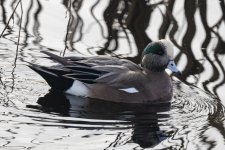
use a high through-put strategy - skim off the easiest-to-digest components and defecate the rest = the fiber. This explains the voluminous poo piles left behind by a flock of feeding geese.
Steve
I saw five bald eagles, four adults and one subadult, in my last visit to Nisqually Wildlife Refuge.
With Nisqually’s ponds, canals, and marshes topped up by the recent rains, its dense concentration of waterfowl creates a rich hunting ground for eagles. So, the cackling geese and ducks are VERY wary and burst into flight at the slightest sign of an eagle soaring overhead.
But the geese and ducks need to land soon to continue feeding.The Canada geese are wary too.
But they appear to be too big of a meal for an eagle, especially with so many bite-size morsels around. The Canada geese tend to hold their ground when an eagle passes by.
Many mammal species consume foliage = folivores. But the energy contained in plant foliage is very hard to access. To digest cellulose efficiently, mammals have evolved elaborate structures that serve as homes for symbiotic bacteria that produce celluloses. These structures include a rumen (= multi-chambered stomach of a cow, deer, or sheep) or an enlarged cecum (blind sack at the start of the large intestine). Repeated chewing by grinding molars increases the surface area of the ingested plant material and speeds the rate of digestion. The mammals consume the easy-to-digest bacteria or the by-products of bacterial fermentation of foliage. Still, it takes time to digest foliage efficiently.
But flying requires a light body mass and that constrains the abilities of most birds to evolve these elaborate digestive structures or to fly around large masses of slowly-digesting plant material. Large flightless birds, such as ostriches and rheas, are less constrained and consume more plant material. But geese, swans, and some ducks are major herbivores and excellent fliers.
How do these waterfowl do it? First, like many birds, they consume gravel and sand (aka, grit or gastroliths) which combines with the plant fibers in the muscular gizzard.
Contraction of these muscles power pebbles and sand rip open the cells, releasing their aqueous contents, much like mortal and pestle. [Rounded rocks, called gastroliths, have been found in the digestive tracks of toothless duck-billed dinosaurs, supposedly to aid mechanical digestion of plant material.]. The aqueous contents of a cell are easy to digest, but without symbiotic bacteria, the cellulose (i.e., fiber) is indigestible. So, geese and other folivorous waterfowl (e.g., American wigeons)
use a high through-put strategy - skim off the easiest-to-digest components and defecate the rest = the fiber. This explains the voluminous poo piles left behind by a flock of feeding geese.
Steve
Last edited:
We were out there last Saturday. The hunters on the reach brought down a duck which was promptly picked up by one of the eagles.
Thanks for the pics! Always excellent.
Thanks for the pics! Always excellent.

Nice! Superb shots as usual. Pickings have been slim in my near to home spots - not many small birds at all, nor have I seen any Eagles, which is unusual. Lots of Pelicans, Honkers & Coots around. Only photos I have taken of late were of Daughter, Grands & SIL on a Columbia River Santa lunch cruise. I got set-up, texted them when the cruise boat was a couple hundred yards away & got photos of them on the rear deck as they went by.
Bass-O-Matic
Life of the Party
Lake Seminole
Nisqually Wildlife Refuge, December 2023, Part 2 of 5
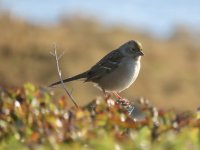
On a typical walk along the trails at Nisqually, you will encounter several flocks of cheeky, photogenic golden-crowned sparrows, including juveniles like this one.
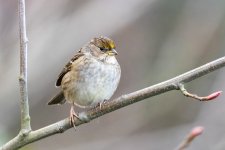
They migrate into Nisqually in the fall and each flock reliably occupies a section of the refuge. I always see them nibbling on grass blades in winter; so hard-to-digest foliage is a major part of their winter diet.
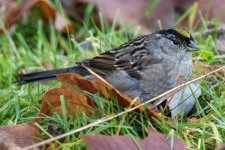 But when I looked up their diet in the scientific literature, there is a mention of plant matter, but no indication that it forms such a major component or how they digest it.
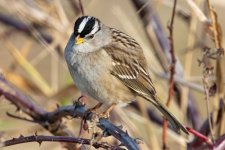
I don’t see many white-crowned sparrows at Nisqually in winter, there are a few. Amy and I find more flocks near the coast. I typically think of white-crowned sparrows as seed-eaters, but I have indisputable photographic evidence that at least one white-crowned sparrow nibbled some grass blades too.
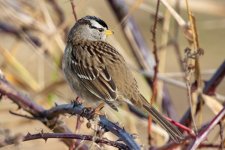
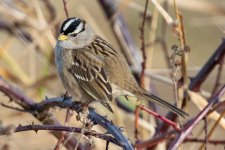
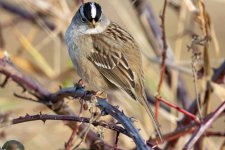
Finally, song sparrows are hams. They are quite unafraid and pose all the time as they check me out.
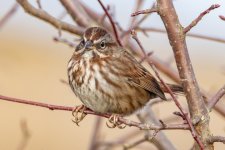
They wouldn’t be caught dead eating greens.
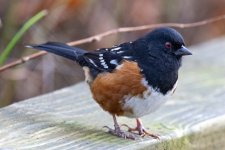
Spotted towhees often hang out in the same shrubby habitat edges as golden-crowned sparrows and song sparrows. They can be cryptic, until they aren’t…
Steve
On a typical walk along the trails at Nisqually, you will encounter several flocks of cheeky, photogenic golden-crowned sparrows, including juveniles like this one.
They migrate into Nisqually in the fall and each flock reliably occupies a section of the refuge. I always see them nibbling on grass blades in winter; so hard-to-digest foliage is a major part of their winter diet.
But when I looked up their diet in the scientific literature, there is a mention of plant matter, but no indication that it forms such a major component or how they digest it.I don’t see many white-crowned sparrows at Nisqually in winter, there are a few. Amy and I find more flocks near the coast. I typically think of white-crowned sparrows as seed-eaters, but I have indisputable photographic evidence that at least one white-crowned sparrow nibbled some grass blades too.
Finally, song sparrows are hams. They are quite unafraid and pose all the time as they check me out.
They wouldn’t be caught dead eating greens.
Spotted towhees often hang out in the same shrubby habitat edges as golden-crowned sparrows and song sparrows. They can be cryptic, until they aren’t…
Steve
Last edited:
Those are some nice looking birds and great pictures! Gotta love the red eye on the towhee.

Bajema
Life of the Party
Been away for a while. Figured I’d pop in and share some bird pics from the year.
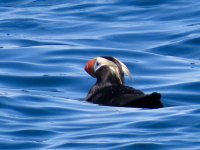
Tufted Puffin at Smith Island
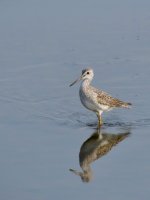
Yellowlegs in Skagit County
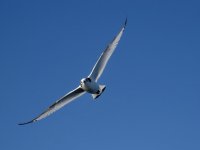
Black-legged Kittiwake out of Westport
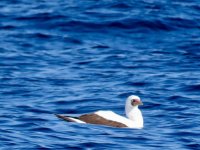
Nazca Booby out of Westport (this one was a big surprise to everyone on the boat)
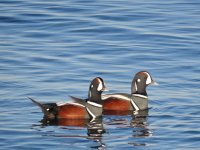
Harlequin Ducks at Semiahmoo
Golden-crowned Sparrow at Semiahmoo
Tufted Puffin at Smith Island
Yellowlegs in Skagit County
Black-legged Kittiwake out of Westport
Nazca Booby out of Westport (this one was a big surprise to everyone on the boat)
Harlequin Ducks at Semiahmoo
Golden-crowned Sparrow at Semiahmoo
Very nice! That booby was a bonus.
Nisqually Wildlife Refuge, December 2023, Part 3 of 5
The diversity and density of birds and mammals at Nisqually supports a large diversity and biomass of predatory birds. While bald eagles are the largest (and most obvious) and peregrines the fastest, I typically see red-tailed hawks and Northern harriers during each visit. The small forest hawks: sharp-shinned and Cooper’s hawks, are rarer. While one used to see, albeit rarely, great horned owls, no one that I talked to them has seen them this year. Instead, several barred owls appear to have moved into the Nisqually refuge, perhaps filling the vacuum.
I have seen as many as three Northern harriers in a single visit. With wide wings and a broad tail, Northern harriers have a very unique acrobatic flying pattern. They fly slowly just a few feet off the ground. The feathers around their eyes act like parabolic dishes to direct sounds in the grass or reeds to their ears (just like owls).
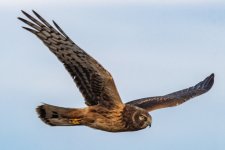
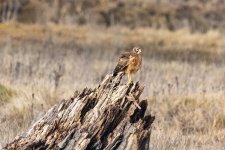
They then pause in flight, focus on identifying the source, and then strike from above. After a long searching flight, they will alight on the open ground or on a tree stump close to the ground.
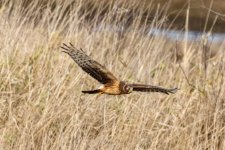
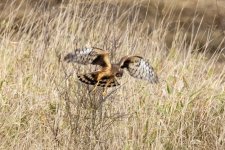
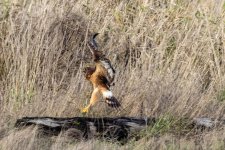
But taking good pictures of Northern harriers at Nisqually is a challenge as these birds appear to be much more skittish than the individuals at Ridgefield Wildlife Refuge. For most of the fall, I have hoped to have them come within reasonable camera range as I walked along the gravel dike that separates the saltwater mud flats from the freshwater marsh. But, they always seemed to be out of range when they crossed the dike or veered away from my position. But last week, I was luckier and I managed to capture one bird in flight,
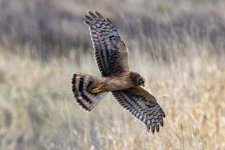
in an unsuccessful attack,
and perched on a log.
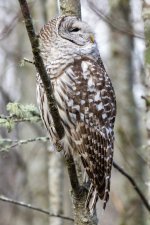
The birder community that visits Nisqually is very friendly and helpful. As I was walking back along the dike trail after my close encounter with a Northern harrier, several birders advised me that there were two barred owls just off the trail ahead. It wasn’t hard to see the first barred owl perched in side branch of a young tree. It was dozing perhaps 20’ away from the gravel dike trail and 8’ off the ground. While the bird’s body was facing the trail, its head was turned away such that it would be looking over its left shoulder. Its eyes opened now and again, but it was unconcerned about our presence.
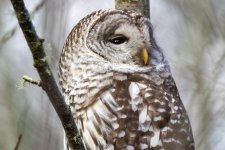
I searched for the second barred owl, but I could not see it from this location.
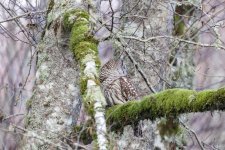
A short distance along the boardwalk trail that parallels the gravel dike trail two other birders pointed out the second barred owl. It was perhaps 40’ away and perched near the trunk of a tree. It wasn’t hard to spot once you knew where to look. Like the first owl, it was just snoozing in the early afternoon.
Steve
The diversity and density of birds and mammals at Nisqually supports a large diversity and biomass of predatory birds. While bald eagles are the largest (and most obvious) and peregrines the fastest, I typically see red-tailed hawks and Northern harriers during each visit. The small forest hawks: sharp-shinned and Cooper’s hawks, are rarer. While one used to see, albeit rarely, great horned owls, no one that I talked to them has seen them this year. Instead, several barred owls appear to have moved into the Nisqually refuge, perhaps filling the vacuum.
I have seen as many as three Northern harriers in a single visit. With wide wings and a broad tail, Northern harriers have a very unique acrobatic flying pattern. They fly slowly just a few feet off the ground. The feathers around their eyes act like parabolic dishes to direct sounds in the grass or reeds to their ears (just like owls).
They then pause in flight, focus on identifying the source, and then strike from above. After a long searching flight, they will alight on the open ground or on a tree stump close to the ground.
But taking good pictures of Northern harriers at Nisqually is a challenge as these birds appear to be much more skittish than the individuals at Ridgefield Wildlife Refuge. For most of the fall, I have hoped to have them come within reasonable camera range as I walked along the gravel dike that separates the saltwater mud flats from the freshwater marsh. But, they always seemed to be out of range when they crossed the dike or veered away from my position. But last week, I was luckier and I managed to capture one bird in flight,
in an unsuccessful attack,
and perched on a log.
The birder community that visits Nisqually is very friendly and helpful. As I was walking back along the dike trail after my close encounter with a Northern harrier, several birders advised me that there were two barred owls just off the trail ahead. It wasn’t hard to see the first barred owl perched in side branch of a young tree. It was dozing perhaps 20’ away from the gravel dike trail and 8’ off the ground. While the bird’s body was facing the trail, its head was turned away such that it would be looking over its left shoulder. Its eyes opened now and again, but it was unconcerned about our presence.
I searched for the second barred owl, but I could not see it from this location.
A short distance along the boardwalk trail that parallels the gravel dike trail two other birders pointed out the second barred owl. It was perhaps 40’ away and perched near the trunk of a tree. It wasn’t hard to spot once you knew where to look. Like the first owl, it was just snoozing in the early afternoon.
Steve

Gyrfalcon22
Legend
These younger bald eagles have been watching too many Star Wars movies
Last edited:
I stumbled across a site that might be of interest.
Kate Davis, raptorsoftherockies.net
There are some great pics, including a kestrel on an immature eagle.
Roast is ready for the oven.
Bon appetite .
Kate Davis, raptorsoftherockies.net
There are some great pics, including a kestrel on an immature eagle.
Roast is ready for the oven.
Bon appetite .