I have these too. They produce a ton continually till they die. I like how they taste, and I like how they reseed by themselves every year.Gonna have to look into those ground cherries. Interesting.

Navigation
Install the app
How to install the app on iOS
Follow along with the video below to see how to install our site as a web app on your home screen.
Note: This feature may not be available in some browsers.
More options
Style variation
You are using an out of date browser. It may not display this or other websites correctly.
You should upgrade or use an alternative browser.
You should upgrade or use an alternative browser.
2023 Garden Thread
- Thread starter mcswny
- Start date
A
Anonymous member 148
Guest
I'll send you some seeds, my only gripe is they are difficult to harvest. They sprawl across the ground so I had to lay on my belly and pull the vines up to scrape them up off the ground. They are ripe when they fall off the plant. The process of pulling up the vines knocks a bunch more down that arnt fully ripe. I think if you cage them and get them up off the ground like a tomato it would be much easier.Gonna have to look into those ground cherries. Interesting.

tkww
Life of the Party
Only my cherry tomatoes survived the blossom end rot, pretty much everything else succumbed.
The most likely culprit is calcium deficiency. (Did you have any peppers--same issue?) Bone meal is your friend. Put a healthy dose in with root ball, fill the hole half-way up (assuming you're burying some of the stem), add another dose, and then finish burying it.
I've frequently come across "watering issues" as a cause. I've had automated water for most of my gardening life so I can't comment there. That said, watering seems more related to splitting/cracking and the ensuing rot at those sites. My experience is that true end rot is just calcium related.
Can also put some of that weed barrier cover under them to keep them clean. I agree training them up off the ground helps.I'll send you some seeds, my only gripe is they are difficult to harvest. They sprawl across the ground so I had to lay on my belly and pull the vines up to scrape them up off the ground. They are ripe when they fall off the plant. The process of pulling up the vines knocks a bunch more down that arnt fully ripe. I think if you cage them and get them up off the ground like a tomato it would be much easier.
A
Anonymous member 148
Guest
Well I did bone meal in each hole, watering was inconsistent this year as we ran out of time to get a good irrigation system up and running. This was also a fresh new uncultivated site, was pasture for who knows how long, it needs some organic matter worked in. Next year I plan on doing drip lines under mulch for the tomatos and peppers. Also 10 foot electric fence and those sonic ultra violet sensor booby traps, the deer definitely key in on peppers and tomatoes and leave the rest alone, they didn't care for the Tomatillos either.The most likely culprit is calcium deficiency. (Did you have any peppers--same issue?) Bone meal is your friend. Put a healthy dose in with root ball, fill the hole half-way up (assuming you're burying some of the stem), add another dose, and then finish burying it.
I've frequently come across "watering issues" as a cause. I've had automated water for most of my gardening life so I can't comment there. That said, watering seems more related to splitting/cracking and the ensuing rot at those sites. My experience is that true end rot is just calcium related.
tkww
Life of the Party
Interesting. So maybe watering is a thing?Well I did bone meal in each hole, watering was inconsistent this year as we ran out of time to get a good irrigation system up and running. This was also a fresh new uncultivated site, was pasture for who knows how long, it needs some organic matter worked in.
I grew up in a town where the deer would invade as the snow started filling up the surrounding foothills. All the unprotected arborvitae would a haircut right up to head height.
A
Anonymous member 148
Guest
Yea, we discussed it a few pages back, the plant won't be able to uptake the calcium, even if there's plenty of it, without consistent moisture levels. So you having an automated watering system and no blossom end rot makes perfect sense to me.Interesting. So maybe watering is a thing?
I grew up in a town where the deer would invade as the snow started filling up the surrounding foothills. All the unprotected arborvitae would a haircut right up to head height.
tkww
Life of the Party
Well to be clear it was adding the calcium that made it go away for me. The automated watering alone most certainly didn't prevent it.Yea, we discussed it a few pages back, the plant won't be able to uptake the calcium, even if there's plenty of it, without consistent moisture levels. So you having an automated watering system and no blossom end rot makes perfect sense to me.

Apologies for any confusion. Maybe this makes more sense:Depends where the plants are planted, in pots or in the ground.
Many Japanese Maples are grafted, but some, mostly species types, are not.
If in pots, check anytime, if in the ground...well if they are still alive at this point, they have roots.
Pics will help...
Generally speaking small plants are best moved in Fall, or late winter.
I may be confused by the question...

DAY ONE Clippings are taken, trimmed, clipped ends covered with rooting hormone (CLONEX), and then "planted" in a "nursery box" in a rooting mixture of sphagnum moss, perlite, & organic soil conditioner.
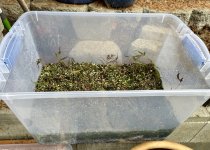
...........then, each day, the planted cuttings are misted and covered in a shaded location while, hopefully, they are developing roots...
My question (for those that have done this) is: How many days do you keep the cuttings in this rooting mixture before you pull up the cuttings to check for root development? There are lots of YouTube videos covering this topic, but I thought I'd ask the forum experts here to get some local advice......

Dr. Magill
Life of the Party
I would just be patientApologies for any confusion. Maybe this makes more sense:
DAY ONE Clippings are taken, trimmed, clipped ends covered with rooting hormone (CLONEX), and then "planted" in a "nursery box" in a rooting mixture of sphagnum moss, perlite, & organic soil conditioner.
View attachment 80173
...........then, each day, the planted cuttings are misted and covered in a shaded location while, hopefully, they are developing roots...
My question (for those that have done this) is: How many days do you keep the cuttings in this rooting mixture before you pull up the cuttings to check for root development? There are lots of YouTube videos covering this topic, but I thought I'd ask the forum experts here to get some local advice......
How much green have you left on the cutting? Keep an eye on the color and condition of that. Just keep observing the cuttings where they are in contact with the starting medium .
How much tension is on the cutting as you put upward pressure on it
I would do a high volume and pay attention
Uncontrolled science experiment
Dr. Magill
Dr. Magill
Life of the Party
Some bottom heat can be beneficial
A lot of the success depends upon how you prepare your cuttings
I’d use a shallower tray too
A lot of the success depends upon how you prepare your cuttings
I’d use a shallower tray too

Bambooflyguy
Legend
We just picked our Italian plums, 40 pounds from one little tree! Last year we got 10….. We harvested them a little early but the wife says they’ll ripen off the tree and before the damn raccoons and squirrels peck on more of them!
Last edited:

I planted one of these trees about 10 years ago and never got much of a crop until this year. I think I haven't been watering that tree as much as it needs. My little postage stamp sized back yard lawn is very shallow topsoil over hard pan. A little watering keeps the grass green, but this year I noticed that the top leaves of the tree were shriveling up. I increased the watering, and that seemed to help. Although a lot of plums shriveled and fell off the tree before ripening, I still got over 1 1/2 food dehydrator loads from the tree. Now that I understand that this tree needs a lot more water than the grass, I hope to get a decent crop every year. Possibly wishful thinking for this non-green thumb gardener.We just picked our Italian plums, 40 pounds from one little tree! Last year we got 10….. We harvested them a little early but the wife says they’ll ripen off the tree and before the damn raccoons and squirrels peck on more of them!
Dried plums (or prunes) are one of my favorite snacks for hiking. I tried buying them in the grocery store, but they are only half dried and then loaded with chemicals to preserve them and additional sugar, which is dumb since fully dehydrated they keep with no additives. Drying them concentrates their natural sugar, making them plenty sweet.
About the squirrels, if they are the non-native eastern gray squirrels, a well sighted in pellet rifle is called for.

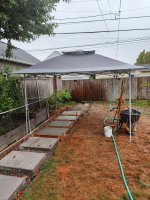
When it starts raining in the middle of your concrete project, break out the party tent
Bambooflyguy
Legend
Ah ha! It’s your fault it’s raining!
Bambooflyguy
Legend
It’s all good Gary…our lawns, gardens and salmon thank you! Now finish your concrete job.
Can't, going fishing tomorrowIt’s all good Gary…our lawns, gardens and salmon thank you! Now finish your concrete job.


A
Anonymous member 148
Guest
All of the wild pea of Umbria I left to dry have PEA WEAVILS, *actually a beetle. They bore a hole in each dry pea and hollow it out. I would say 90% loss. I should be able to scavenge enough for seed next year. Anyone know how to prevent these without pesticide?
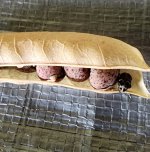


Pea, green and dry-Pea weevil
Bruchus pisorum Pest description and crop damage The adult pea weevil is a chunky beetle about 0.19 inch in length with a short, broad...
Saving the seed for replanting probably is not in your best interest.