Hi Ira,
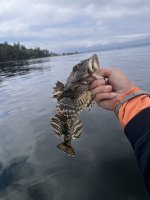
The picture in the second picture is certainly a staghorn sculpin (
Leptocottus armatus). The first sculpin is a
great sculpin (
Myoxocephalus polyacanthocephalus). In a great sculpin, the preopercular spine, which is branched in staghorn sculpins (hence the common name) is straight and stout. The only other sculpin that has a straight, stout preopercular spine is the
buffalo sculpin (
Enophrys bison). But a buffalo sculpin has a smaller mouth (vs. the bucket-like mouth of a great sculpin. And the eyes of buffalo sculpins are located closer together on top of the head (almost like on turrets), while the eyes of great sculpins are spread further apart and flush with the general head outline. While diving, I tended to encounter great sculpin on rocky outcrops in lower-current (sediment-covered) areas while the
red Irish lord (
Hemilepidotus hemilepidotus) tended to be more common (but never really common) on rocky surface in higher-current (sediment-free) areas. Red Irish Lords tend to be much more
colorful (especially reddish patterns to blend in with red algae) and lack the white circles on a dark background on the belly.
From my research, great sculpins tended to feed on amphipods when they first recruited to sandy/gravely intertidal areas. As they grow, they progress to crabs, shrimp, and fish in their diet - pretty opportunistic.
Steve



 Seems like the incoming tide on that beach is much much better!



 ! I have two dedicated salt clicker reels. Grease for days.