Puget Sound

Fished an east side MA9 beach. Started at 6am on an outgoing tide. Saw some bait jumping around but nothing to hand. Although, I did catch the biggest sculpin of my life! If Paul is around here on the forums, it was great chatting with you again!
I fished a beach of that description this morning at tide change. Bumped into Paul (North Sound) coming out. I went 1/2 on rezzies fast stripping over eel grass. Unclipped fish. I also caught a large sculpin while untangling my line! lol
 
I fished a beach of that description this morning at tide change. Bumped into Paul (North Sound) coming out. I went 1/2 on rezzies fast stripping over eel grass. Unclipped fish. I also caught a large sculpin while untangling my line! lol
I must've just missed ya! What time were you out? Glad my sculpin buddy visited you ;) Seems like the incoming tide on that beach is much much better!
 
I must've just missed ya! What time were you out? Glad my sculpin buddy visited you ;) Seems like the incoming tide on that beach is much much better!
Out at 1:00, but the action was all within an hour to two hours after tide change.

Wouldn't be surprised if that was your sculpin buddy. They never learn from their mistakes!

Hope to meet you on the beach sometime.
 
Fished an east side MA9 beach. Started at 6am on an outgoing tide. Saw some bait jumping around but nothing to hand. Although, I did catch the biggest sculpin of my life! If Paul is around here on the forums, it was great chatting with you again!
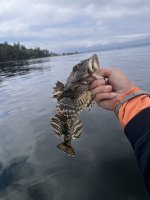
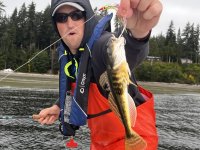
Pictures or it didn’t happen! As a side note, @Cabezon please help me identify these sculpin. The second one I’m fairly sure is a big staghorn, but the first one is new to me, which is very, very exciting!IMG_5638.jpegIMG_5628.jpeg
 
Pictures or it didn’t happen! As a side note, @Cabezon please help me identify these sculpin. The second one I’m fairly sure is a big staghorn, but the first one is new to me, which is very, very exciting!View attachment 75492View attachment 75493
Hi Ira,
The picture in the second picture is certainly a staghorn sculpin (Leptocottus armatus). The first sculpin is a great sculpin (Myoxocephalus polyacanthocephalus). In a great sculpin, the preopercular spine, which is branched in staghorn sculpins (hence the common name) is straight and stout. The only other sculpin that has a straight, stout preopercular spine is the buffalo sculpin (Enophrys bison). But a buffalo sculpin has a smaller mouth (vs. the bucket-like mouth of a great sculpin. And the eyes of buffalo sculpins are located closer together on top of the head (almost like on turrets), while the eyes of great sculpins are spread further apart and flush with the general head outline. While diving, I tended to encounter great sculpin on rocky outcrops in lower-current (sediment-covered) areas while the red Irish lord (Hemilepidotus hemilepidotus) tended to be more common (but never really common) on rocky surface in higher-current (sediment-free) areas. Red Irish Lords tend to be much more colorful (especially reddish patterns to blend in with red algae) and lack the white circles on a dark background on the belly.
From my research, great sculpins tended to feed on amphipods when they first recruited to sandy/gravely intertidal areas. As they grow, they progress to crabs, shrimp, and fish in their diet - pretty opportunistic.
Steve

 
Hi Ira,
The picture in the second picture is certainly a staghorn sculpin (Leptocottus armatus). The first sculpin is a great sculpin (Myoxocephalus polyacanthocephalus). In a great sculpin, the preopercular spine, which is branched in staghorn sculpins (hence the common name) is straight and stout. The only other sculpin that has a straight, stout preopercular spine is the buffalo sculpin (Enophrys bison). But a buffalo sculpin has a smaller mouth (vs. the bucket-like mouth of a great sculpin. And the eyes of buffalo sculpins are located closer together on top of the head (almost like on turrets), while the eyes of great sculpins are spread further apart and flush with the general head outline. While diving, I tended to encounter great sculpin on rocky outcrops in lower-current (sediment-covered) areas while the red Irish lord (Hemilepidotus hemilepidotus) tended to be more common (but never really common) on rocky surface in higher-current (sediment-free) areas. Red Irish Lords tend to be much more colorful (especially reddish patterns to blend in with red algae) and lack the white circles on a dark background on the belly.
From my research, great sculpins tended to feed on amphipods when they first recruited to sandy/gravely intertidal areas. As they grow, they progress to crabs, shrimp, and fish in their diet - pretty opportunistic.
Steve
Hell yeah! @Nick Clayton called it when I landed it. But I wanted an expert 😁
 
Hi Ira,
The picture in the second picture is certainly a staghorn sculpin (Leptocottus armatus). The first sculpin is a great sculpin (Myoxocephalus polyacanthocephalus). In a great sculpin, the preopercular spine, which is branched in staghorn sculpins (hence the common name) is straight and stout. The only other sculpin that has a straight, stout preopercular spine is the buffalo sculpin (Enophrys bison). But a buffalo sculpin has a smaller mouth (vs. the bucket-like mouth of a great sculpin. And the eyes of buffalo sculpins are located closer together on top of the head (almost like on turrets), while the eyes of great sculpins are spread further apart and flush with the general head outline. While diving, I tended to encounter great sculpin on rocky outcrops in lower-current (sediment-covered) areas while the red Irish lord (Hemilepidotus hemilepidotus) tended to be more common (but never really common) on rocky surface in higher-current (sediment-free) areas. Red Irish Lords tend to be much more colorful (especially reddish patterns to blend in with red algae) and lack the white circles on a dark background on the belly.
From my research, great sculpins tended to feed on amphipods when they first recruited to sandy/gravely intertidal areas. As they grow, they progress to crabs, shrimp, and fish in their diet - pretty opportunistic.
Steve
This one took a shrimp like pattern in 45’ of water. It fought, in my opinion better than the staghorns. Then again, I’ve only landed one staghorn larger than this (which was likely a state record) but it was also on the line with the largest sand dab I have ever landed, so not really comparable as a sport fish opportunity.
 
This one took a shrimp like pattern in 45’ of water. It fought, in my opinion better than the staghorns. Then again, I’ve only landed one staghorn larger than this (which was likely a state record) but it was also on the line with the largest sand dab I have ever landed, so not really comparable as a sport fish opportunity.
Hi Ira,
Do you think that your fly was near the bottom (or close) or up in the water column when the great sculpin grabbed it? I can't imagine great sculpins swimming up in the water column, but you never know. One of the stranger observations that I have had while diving in the San Juans was watching a ling cod beating its pectoral fins to keep itself suspended underneath a dense school of herring near the surface. Where there is a will (or a tasty food option), there is a way.
Steve
 
You might get a kick out of the reel I am running on it right now. And to continue the “vintage” theme, I am throwing a 300 grain Streamer Express which flies out the guides, provided the running line has been stretched and reasonably stacked/coiled from the prior cast. That running line does occasionally tangle but otherwise I really like how that line fishes.
View attachment 75405

Dang that fish cut and ate so well! My wife asked several times, “Why is this salmon so good?”
View attachment 75407View attachment 75406View attachment 75408View attachment 75409
Hell yeah 🤘! I have two dedicated salt clicker reels. Grease for days.

Plated looks so good with that rice mix dam you 🤤
 
Hi Ira,
Do you think that your fly was near the bottom (or close) or up in the water column when the great sculpin grabbed it? I can't imagine great sculpins swimming up in the water column, but you never know. One of the stranger observations that I have had while diving in the San Juans was watching a ling cod beating its pectoral fins to keep itself suspended underneath a dense school of herring near the surface. Where there is a will (or a tasty food option), there is a way.
Steve
Bottom! Bottom! Bottom!
 
Another slow day, at least comparing to previous weeks (shifting baselines!). I went stupid early to set crab pots and then look for bait/surface action to cast flies at while waiting for my kid, kid friend and dad to wake up and come pick them up for some kid friendly fishing before picking crab pots. Just could not find the bait, except very deep while setting crabpots, looked at 3 different spots, nice cloud cover, nada. Right before slack I found a weed line in the middle of nowhere, no signs of bait or surface action but at least it was something. A hatchery, ocean coho just shy of 5 lbs picked an oversized "dazed and conefused" fly at the start of the retrieve, charged the boat as I furiously stripe line to catch up and the fish just stood there, confused next to the boat and refusing to fight! Weird fight, but it came home nonetheless. No other action before picking the crew, right after that and with the bright sun starting to burn the cloud cover, we trolled and picked a second coho. Then time for the "always a hit" session of flatfishes on ultralight gear for the kids, mini aquarium on the boat for a bit and then all released. Then crab pot pick up (enough for a 2 family dinner). The checker said it was very slow and the creel reports for area 10 show less than 30 coho and 15 kings for more than 100 anglers...where did the bait and fish go? Good day overall, kids had a blast, just missing the surface action we had seen lately.

View attachment 75360
View attachment 75363


View attachment 75366
View attachment 75270
@Stonedfish , I am pretty sure that's the "Wharfing (Barfing?...spelling?) Annie"), it has been fishing central Puget Sound for salmon for the last several years (at least since COVID times), interesting boat for the salt for sure!
Gorgeous silver- How are you able to distinguish ocean fish and Puget Sound fish? I hooked into a 4lb or so Coho buck around Possession Bar that had a pronounced hooked nose, and a dark coloration above its lateral line that I usually only see on maturing ocean fish
 
Gorgeous silver- How are you able to distinguish ocean fish and Puget Sound fish? I hooked into a 4lb or so Coho buck around Possession Bar that had a pronounced hooked nose, and a dark coloration above its lateral line that I usually only see on maturing ocean fish
The puget sound fish tend to speak just American, while the oceangoing fish usually throw you an “aye”, taste good with a maple syrup glaze and sometimes know a little Russian.
 
Gorgeous silver- How are you able to distinguish ocean fish and Puget Sound fish? I hooked into a 4lb or so Coho buck around Possession Bar that had a pronounced hooked nose, and a dark coloration above its lateral line that I usually only see on maturing ocean fish
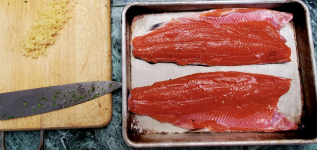
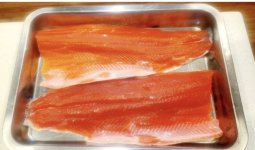
Distinguishing betwen ocean and resident coho is not exactly an exact science for the average sport fisherman on the spot. From year to year, if your fish was scanned by a sampler, had a CWT tag, you can take a picture of the code and look for the hatchery origin, release date, age, etc. At least from my personal experience, earlier coho (June to mid-July) tend to be almost exclusively resident fish. Early resident coho here are stuffed with krill, crab larvae, etc, and their meat is red and fatty, like sockeye. As the season progresses and reaching around 20-inches or so they start eating more herring/other fishes and their meat is still red but not as intense as early resident fish. Ocean coho tend to be bigger, their meat more orange and maturation state (eggs, gonads) more advanced than resident fish. Of course there is variation in timing, coloration, sizes, etc and other people may have other experiences. First picture below two fillets of an early resident coho. Second not a great picture of two fillets from different recent coho catches, top filet is what I consider an ocean fish (orange color, it had more mature gonad and eggs), bottom fillet a resident coho but with herring in their diet, still red, put paler than early rezzies.
Or you could just ask the fish like @Divad suggested!

1690861957673.pngScreenshot_20230731_204613.jpg
 
Last edited:
"As they grow, they progress to crabs, shrimp, and fish in their diet - pretty opportunistic."

Sounds like a ling cod.

(sorry, poor editing on my part)
 
Last edited:
Not the best Pic but the best I could manage. These are the little baitfish I've been seeing this past week, maybe 1 - 1.5" max and right in the surface film, groups of these on the inside soft water of a good seam on the outgoing. They seem to be kind of translucent. No fishing today, yesterday morning 1/1 with a nice SRC in the hour I had, any ideas on baitfish species?
20230731_081917.jpg
 
Not the best Pic but the best I could manage. These are the little baitfish I've been seeing this past week, maybe 1 - 1.5" max and right in the surface film, groups of these on the inside soft water of a good seam on the outgoing. They seem to be kind of translucent. No fishing today, yesterday morning 1/1 with a nice SRC in the hour I had, any ideas on baitfish species?
View attachment 75598

Hard to tell from the pic, but they look fat in the abdomen area. They look like sticklebacks to my old eyes rather then sandlance.
SF
 
Fished this am on the outgoing tide. Finally saw some fish around but they were very picky. Tried all the usual stuff with no luck. No wind and no current to start as it was flat calm. Small rezies around with a few larger boils to make guesses at. Finally wind started so with a guess I put on a muddler and cast down wind. Hooked a 4-5lb coho and then it died off quickly. Thankful for the one anyway.
 
Back
Top