Navigation
Install the app
How to install the app on iOS
Follow along with the video below to see how to install our site as a web app on your home screen.
Note: This feature may not be available in some browsers.
More options
Style variation
You are using an out of date browser. It may not display this or other websites correctly.
You should upgrade or use an alternative browser.
You should upgrade or use an alternative browser.
February tying contest thread-and January's winner is:
- Thread starter Billy
- Start date
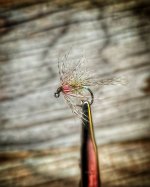


I think he's got our number, fellas...What does @Taxon say? Perhaps we are suffering spending too much time indoors.

Looks like we are both wrong.Perhaps some are suffering. My heart goes out to them.
Correct me if I’m wrong, but looks to me like a pupa is not a nymph. It is the difference between complete and incomplete metamorphosis.
Complete metamorphosis is a type of insect development that contains four stages that are egg, larva, pupa, and adult and the stages differ morphologically.
Incomplete metamorphosis is a type of insect development where gradual changes occur between the egg stage and the adult. It contains three stages which are egg, nymph, and adult.
- Complete metamorphosis refers to a type of insect development where the developmental stages are different from each other morphologically, while incomplete metamorphosis is a type of development in insects where changes in their body occur gradually during their lifetime.
- Complete metamorphosis has four developmental stages while incomplete metamorphosis contains three stages.
- The complete metamorphosis contains larvae which are very active, ravenous-eating larvae, while incomplete metamorphosis contains nymphs which resembles adults.
- In complete metamorphosis, the exoskeleton is shed while in the incomplete metamorphosis the exoskeleton may remain throughout the lifetime.
- Reproductive ability is found in adults in complete metamorphosis while in incomplete metamorphosis reproductive ability is successful in some former stages.


First, I’m going to address “syntax,” which you can look up the definition for—it refers to the order and sequence of words, so I don’t see how syntax is relevant. Again, I think you must mean “diction,” which refers to word choice.
Second, if you are calling a pupa a nymph, I’m fine with that. I can see a pupa being a “nymph” in a colloquial sense, but I don’t think that is how taxonomists classify the different phases. That’s what I was saying. But I’m not a taxonomist. What say you, @Mark Melton and @Taxon : is a chironomid pupa a nymph?
I'm only to page three and you guys are making my head hurt.I’m such an idiot, I didn’t mean syntax, I meant semantics. I do know the difference, but somehow syntax was stuck in my brain. Semantics are what you are arguing, colloquial or not. It’s like telling someone that you don’t have a Band-Aid to give them because all you have are adhesive strips not the actual brand. Or throwing a tomato into a fruit salad. Chironomid pupae are called nymphs.
The point ultimately is that in the drawing Diptera would work. I personally don’t understand why “emerger” is so hard to define though, unless as I said before people just want to make up an excuse to throw up a pattern that isn’t an emerger.

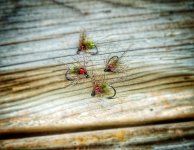
Do I see a micro barb on each hook? What hook? These would be absolutely KILLER on the big marl shoal on my favorite BC lake, BUT: I'd fish it with an I-line so it would be a streamer-nymph not an emerger (how's that Matt and Ira? Streamer-nymph - a new classification).

You mean something like this?Do I see a micro barb on each hook? What hook? These would be absolutely KILLER on the big marl shoal on my favorite BC lake, BUT: I'd fish it with an I-line so it would be a streamer-nymph not an emerger (how's that Matt and Ira? Streamer-nymph - a new classification).
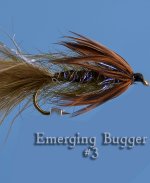



I'm feeling like these would also be killer in a lot of high mountain lakes. Gonna have to tie a few up. Thanks for the inspiration @BillyThese would be absolutely KILLER on the big marl shoal on my favorite BC lake

You can probably tie them easier on a regular hook. I tied them specifically on a jig hook for one very shallow lake and possibly to throw a foot or even less under an indie.I'm feeling like these would also be killer in a lot of high mountain lakes. Gonna have to tie a few up. Thanks for the inspiration @Billy
@Buzzy Ahrex mini jig available barb and barb less. Very strong and sticky hook.

I'm not quite sure what one is...Now for God sake somebody post an emerger.

Aquatic insects undergo either incomplete metamorphosis or complete metamorphosis. Incomplete metamorphosis has (3) lifestages, which are commonly referred to as egg, nymph, and adult. Complete metamorphosis has (4) lifestages, which are commonly referred to as egg, larva, pupa, and adult.Perhaps some are suffering. My heart goes out to them.
Correct me if I’m wrong, but looks to me like a pupa is not a nymph. It is the difference between complete and incomplete metamorphosis.
Complete metamorphosis is a type of insect development that contains four stages that are egg, larva, pupa, and adult and the stages differ morphologically.
Incomplete metamorphosis is a type of insect development where gradual changes occur between the egg stage and the adult. It contains three stages which are egg, nymph, and adult.
- Complete metamorphosis refers to a type of insect development where the developmental stages are different from each other morphologically, while incomplete metamorphosis is a type of development in insects where changes in their body occur gradually during their lifetime.
- Complete metamorphosis has four developmental stages while incomplete metamorphosis contains three stages.
- The complete metamorphosis contains larvae which are very active, ravenous-eating larvae, while incomplete metamorphosis contains nymphs which resembles adults.
- In complete metamorphosis, the exoskeleton is shed while in the incomplete metamorphosis the exoskeleton may remain throughout the lifetime.
- Reproductive ability is found in adults in complete metamorphosis while in incomplete metamorphosis reproductive ability is successful in some former stages.
Of the aquatic insect orders most commonly imitated by flyfishers, the mayfly and stonefly undergo complete metamorphosis, and the caddisfly and true fly undergo incomplete metamorphosis.
It is my belief that all nymphs and larvae have to periodically shed their exoskeleton in order to accommodate new growth, and that only the adult lifestage individuals have reproductive capability, irrespective of their metamorphosis type, but I'm certainly open to new information.
Last edited:


Ok, so change it to "when the bug's exoskeleton cracks open. . ."To me "emerger" means the the time between when the nymph's exoskelton cracks open (or maybe a little before, when the exoskelton swells up with gas) to when the wings are dry and the bug flies away.
Better, @Matt B ?

So you gonna put that tomato in your fruit salad. Should be yummy.Well well well. It seems plain then that a chironomid pupa, being a true fly, cannot also be a nymph.
View attachment 55739
The prosecution rests.

This is definitely not the strongest closing argument from the Defense that this court has seen. But since we are after hours at the bar now, I’ll tell you that I’m actually not a big fan of fruit salad, but I would not put tomatoes in it, just like I would not put pupae in a nymph salad. But we’re just talking about fruit salad and word salad, the case having been decisively settled and all (with no appeals), so you do you.So you gonna put that tomato in your fruit salad. Should be yummy.
And when I finally get home later this weekend I plan to tie an emerger and post it in this thread.
MillCreekMinnow
Steelhead
I just stopped fly fishing. I also just tossed my vise over the fence. If it emerges, I will definitely not report back to this forum.