

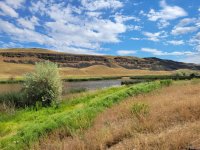
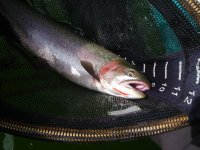
I was fishing on Friday near this body of water in central Washington; I'm sure you'll recognize the location if you've been there. With the warmer water temperatures, I targeted the Lahontan cutthroats which tolerate the warmer temperatures a lot better than the rainbows (no bass in this lake, so sorry, Billy). The surface water temperature was in the 70 to 72 degree range, which was starting to concentrate the fish down in the thermocline. Two weeks ago the water was still too cool to do this, so fishing was tough on that outing and I only landed 4 fish. This time was better, but still not easy fishing; I had 30 solid hits, 17 of those fish on for awhile, and landed & released 15 Lahontans in the 18 to 21 inch range. Here's a typical Lahontan from this lake:
I was finding the fish down in the 19 to 22 foot depths, in 23 to 30 feet of water. The numbers of fish spotted on the fish finder seemed lower than usual, probably due to a higher than normal summerkill last year when it was unusually hot and dry. But, it could also be that more fish have yet to congregate in the thermocline, as everything seems to be later than usual due to the unusually cool, wet spring. The algae bloom was quite bad, but I believe the algae bloom is mainly in the top 6 to 8 feet of water and is otherwise clear below that algae bloom. However, in the mid-afternoon I was having to clean my fly of algae on almost every cast.
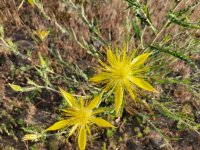
The wildflowers are really blooming out there right now. Here's a Blazing-star, one of my favorites of the desert wildflowers:
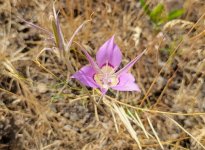
Here's another favorite, a Sagebrush Mariposa Lily:
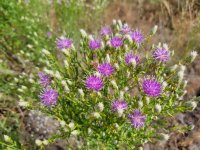
The Russian Knapweed is just starting to bloom:
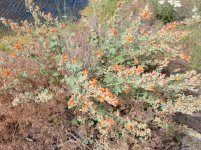
The Desert Mallow is close to finishing up blooming:
There were only two other guys out there, one of whom reported landing 3 fish and the other reported landing one. But, they were new to the lake whereas this was my 56th outing to this lake, so old age (or should I say, experience) should count for something, right? My average over all those outings is 13.6, so 15 fish on this outing was slightly better than average. Oh, here's my Fish Size Distribution Chart:
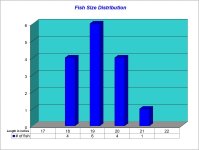
(I measure the fish from the tip of the nose to the fork in the tail to match the way the fisheries biologists measure the length of fish, so your fish length measurements may be slightly longer. I use a Measure Net to quickly determine the length of the fish with the least amount of handling.) Two of the fish were thin and dark, but the others were silvery and healthy and good fighters. Lahontans aren't known for jumping, but I had one jump out of the water, clearing 2 feet or so. I expect the fishing to remain decent for another two or three weeks, if you like deep water thermocline fishing.
Rex


