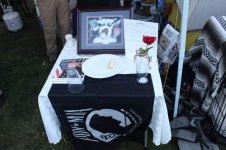
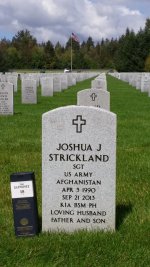
Thanks Jerry,
Memorial Day has become a tradition for me as for the last 15 years, I’ve made the trek South to Yellowstone to fish the Firehole or Gibbon at dawn. Yellowstone is a magical place, no matter when you visit and it remains so since its creation over 150 years ago. Although I am sure I’ve posted about this before, those of us who enjoy Yellowstone today own a huge debt to the U.S. Army veterans and soldiers who not only helped explore and create the park but to those who helped shape the park into what we experience today.
In 1870, Lieutenant Gustavus Cheney Doane was a key part of the Washburn–Langford–Doane Expedition commanding the small group of cavalry soldiers assigned to protect the first serious exploration of the Yellowstone region.
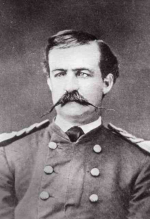
In his
The Yellowstone National Park—Historical and Descriptive (1895), Hiram M. Chittenden praised Doane's expedition report:
His part in the Expedition of 1870 is second to none. He made the first official report upon the wonders of the Yellowstone, and his fine descriptions have never been surpassed by any subsequent writer. Although suffering intense physical torture during the greater portion of the trip, it did not extinguish in him the truly poetic ardor with which those strange phenomena seem to have inspired him. Dr. Hayden says of this report: "I venture to state, as my opinion, that for graphic description and thrilling interest it has not been surpassed by any official report".
Once the park was created in 1872, the U.S. Department of Interior struggled to manage the park and its resources. Vandalism, fires, and poaching became issues that seriously threatened the park’s resources for future generations. In 1886, the problems became so grave that the Department of Interior transferred administrative control of Yellowstone to the War Department and U.S. Army. The Army administered the park 30 years until 1917 when control was passed to the newly established National Park Service.
Several aspects of the Army’s tenure in Yellowstone deserve remembrance on every Memorial Day.
One of those is the foresight of the second U.S. Army superintendent: Captain Frazier Augustus Boutelle.
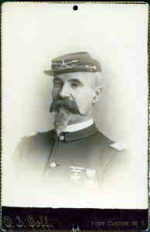
Of the many decisions made by Captain Boutelle in managing the park, his approach to fisheries had significant and lasting impact. Boutelle was an avid angler and recognized the angling potential in Yellowstone waters. In 1889 he suggested the U.S. Fish Commission consider stocking many of the fish-less lakes and streams in Yellowstone.
“Besides the beautiful Shoshone and other smaller lakes, there are hundreds of miles of as fine streams as any in existence without a fish of any kind. I have written Col. Marshall McDonald, U.S. Fish Commission, upon the subject, and have received letters from him manifesting a great interest. I hope through him to see all of these waters so stocked that the pleasure-seeker in the Park can enjoy fine fishing within a few rods of any hotel or camp.
— Acting Superintendent's Report, 1889, Captain Frazier Augustus Boutelle”
This suggestion was acted upon and in 1889 the first non-native fish were stocked into Yellowstone waters, a practice that continued until 1955 and helped create the angling experience Yellowstone National Park is renowned for.
He gained recognition in conservation circles for his advocacy of protection for wildlife, landscape, and natural features. 1889 was a particularly bad year for fires in the region, and Boutelle's demands for more resources for firefighting, supported by conservationist George Bird Grinnell, caused Secretary of the Interior John Willock Noble to dismiss him from the superintendent's post on February 14, 1891.
John Muir a foremost American naturalist and often called the "Father of the National Parks" once wrote:
"Blessings on Uncle Sam's Soldiers. They have done the job well, and every pine tree is waving its arms for joy."
While Yellowstone was under army management, the activities, policies and procedures developed served as precedents for other national parks and subsequent actions by the National Park Service after its formation in 1916. The army solved a wide variety of problems and developed procedures covering a multitude of administrative issues. The military superintendents continued the evolution of park policies and conservation measures initiated by the first civilian administrators. They implemented backcountry patrols, access improvement, wildlife protection and management, protection of natural features, law enforcement and development of a ranger force. The army set precedents for future headquarters area development designs, visitor services such as educational outreach and interpretive tours. Their diligence in dealing with poachers led to legislation that provided for prosecution and punishment of illegal activity. That most of the precedents that the army established were incorporated later by the National Park Service is a lasting legacy of the important role the army played in U.S. national park history. Modern Park Ranger uniforms are legacies of army management of the park. Most ironically, the campaign hat, a flat-brow peaked hat worn by the cavalry in the last years of army management is nearly identical to the modern hats worn into the 21st century.
On this Memorial Day, we must also remember the cost and those who sacrificed themselves for the good of the park.
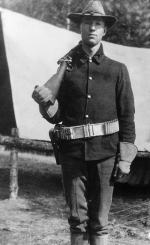
During the Army’s tenure, at least 14 soldiers died in the park.
- 1891 Private James Pruitt Died from a horse kick
- 1893 Private Andrew Preiber Froze to death while on winter patrol
- 1893 Private Ellis Lingard Horse wreck
- 1894 Lieutenant Lunsford Daniel Runaway horse
- 1897 Private John W.H. Davis Froze to death on winter patrol
- 1898 Private Harry P. Donaldson Drowning
- 1904 Private Richard R. Hurley Froze to death on winter patrol
- 1906 Private Harry B. Allen Drowning
- 1908 Private Presley H. Vance Froze to death on winter patrol
- 1910 Private Frank F. Monaghan Drowning
- 1912 Private Frank Cunningham Self-defense shooting
- 1916 Lieutenant Joseph McDonald Avalanche
- 1918 Sargent Arthur S. Brewer Drowning
- 1918 Private Victor Manterfield Drowning
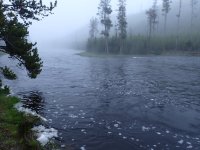
So, as I ply the banks of Yellowstone Rivers this Memorial Day at dawn, I will remember the sacrifices the U.S. Army officers and soldiers made over a 150 years ago to protect the park.
Thanks again Jerry—Mike Cline, Lt Col USAF retired