Flexo Crab - Early Attempts

Mike Cline

Life of the Party
Forum Supporter
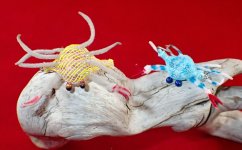
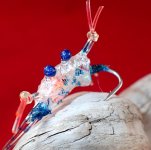
I decided to add a few new patterns to my annual MGTU banquet donation of a large boat patch chock full of saltwater patterns. One of the new ones I thought I'd try is the Flexo Crab, a popular flats pattern.
P9151517.jpeg
From the tyer's viewpoint it was an intimidating pattern that just didn't fit the mold in terms of traditional tying techniques. However, with the help of a few videos and other tying resources, I think I figured it out.

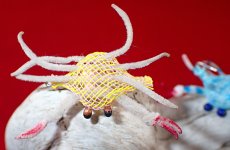
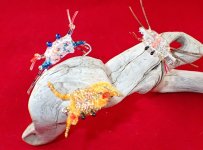
Working with materials on hand I did stumble a bit with using ultra chenille for the legs and claws. The stuff I had was just too fragile. So, I substituted round vinyl ribbing for the claws and legs. Much easier to work with and also very durable. The other lesson involved hook length--the longer 2X the better. Compressing the flex tubing along the hook shank takes up more space than you might think.
P9151516.jpegP9151518.jpeg

Still need to practice a lot with this one, but it will make a decent addition to the saltwater boat patch donation. boat
 
Thos are tricky to get right.
Your doing fine...practice-practice.
I good tyer I know always goes by the saying" there are flies you tie and thos you buy".
 
I decided to add a few new patterns to my annual MGTU banquet donation of a large boat patch chock full of saltwater patterns. One of the new ones I thought I'd try is the Flexo Crab, a popular flats pattern.
View attachment 192550
From the tyer's viewpoint it was an intimidating pattern that just didn't fit the mold in terms of traditional tying techniques. However, with the help of a few videos and other tying resources, I think I figured it out.

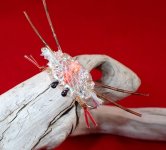
Working with materials on hand I did stumble a bit with using ultra chenille for the legs and claws. The stuff I had was just too fragile. So, I substituted round vinyl ribbing for the claws and legs. Much easier to work with and also very durable. The other lesson involved hook length--the longer 2X the better. Compressing the flex tubing along the hook shank takes up more space than you might think.
View attachment 192549View attachment 192551

Still need to practice a lot with this one, but it will make a decent addition to the saltwater boat patch donation. boat
Those look great! My favorite striper fly was an old Orvis flexo-fish, until it finally got torn apart.
 
They look nice, but in my experience what makes a crab pattern actually catch fish is the way the legs move as it sinks. I don’t think I have ever caught a fish on a crab pattern that didn’t have rubber or silicone legs.
 
Flexo Crab Update
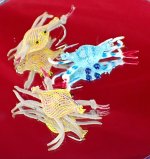
P9231524.jpeg
In my quest to learn how to properly tie a Flexo Crab fly, I think I’ve made some progress over my initial attempts. Apart from the looks of the fly, what remains to be tested is their durability which will have to wait until a Nov/Dec trip to Florida.
P9231522.jpeg
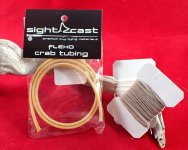
I went to one of our local fly shops to pick up some ultra chenille which is called for in the original pattern. Apart from the chenille I stumbled on some flex tubing specifically designed for this fly. In my short experience with the pattern, the Blane Chocklett’s braid is too stiff to work in small sizes and the typical mylar braid too fragile, coming unraveled easily. The new product is called Flexo Crab Tubing by Sightcastfishing. It comes in 18 different colors, so I just picked up three to try it out. Much easier to work with.

When it comes to tying the pattern, I’ve adopted a few techniques through trial and error that seem to work well to simplify the tying process.
  1. After attaching the dumbbell eyes the thread is moved back to the bend of the hook to create a small bump sealed with UV resin.
  2. The rear end of the tubing is tied in just in front of the thread bump. The bump prevents the Flex tubing from sliding down the hook bend when the tubing is compressed to tie in at the hook eye.
  3. Taking Sightcastfishing’s advice, when the Flexo Tubing is cut, it is immediately cauterized to prevent fraying.
  4. Attempting to thread pre-knotted claws thru the Flexo Tubing usually damaged or distorted the Flexo Tubing and in some cases, it proved near impossible to pass the knotted chenille thru the tubing. Instead, I now thread a generous double length of chenille through the tubing with a bobbin threader and then tie the knots. Takes a bit of dexterity but it creates the claws without damaging the tubing.
P9231525.jpegP9231526.jepg.jpg

I hope to drop a few of these in other colors in front of some Sheepshead in Nov.
 
Last edited:
Back
Top