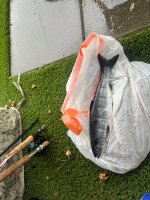
Time for the neighbor to deploy a crane or bulldozer so you can launch your boat.
SF
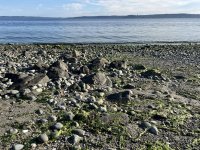
The boulder field. The beach seems extra rocky this year in general. The sand hasn’t built up against our ramp like it has in past years.

Follow along with the video below to see how to install our site as a web app on your home screen.
Note: This feature may not be available in some browsers.
Time for the neighbor to deploy a crane or bulldozer so you can launch your boat.
SF

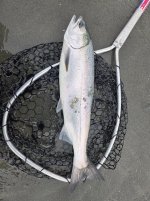

Seemed like high slack lasted forever this morning. A 6am slack tide is tough because you really don’t get into the good fishing until closer to 7. Which on a super sunny day can be a real buzzkill - thankfully today was perfect weather.I also fished that secret beach from 5-9 this morning before having to call it. No bites for the first 2 hours but eventually I ran into some smaller fish once the current started to pick up. This was my biggest and is probably in the running for smallest fish kept today.
Fun to be back out.

A very good opening day for MA9 resident coho fishing with @Stonedfish today. We found them on a couple different beaches despite the rough weather. Big thunder/lightening and heavy rain at times. I finished 7 for 9 with coho ranging from 18-21 inch fork length. Not giants, but fun on a 6 weight. No chinook were touched.
View attachment 188372

Use an 8'6" and stay away from the dude with the 9'6"Fun day. The weather was perfect as far as the clouds and rain. The lightning made things a bit interesting.
SF

Go bamboo!!Use an 8'6" and stay away from the dude with the 9'6"

View attachment 188389
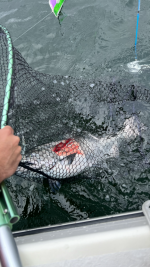
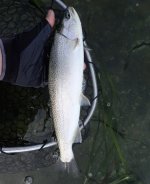
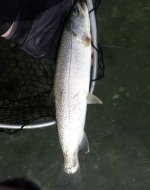
Really pained me to release this wild fish with that bleed. Was easily pushing 20

1 fish limit, must keep first Chinook caught regardless of size. Would save a lot of fish.View attachment 188389
Really pained me to release this wild fish with that bleed. Was easily pushing 20
I saw a guy in Alaska use this:View attachment 187782
The boulder field. The beach seems extra rocky this year in general. The sand hasn’t built up against our ramp like it has in past years.

 www.dexpan.com
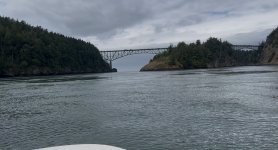

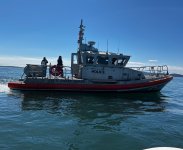
Slow day for us. Only saw the net fly a few times today despite fishing several spots none to produce. One green hoochie loving ling made an appearance. Nice day nonetheless and crab is for dinner.
My friend’s boat also passed the CG safety inspection.
SF
View attachment 188456View attachment 188457View attachment 188458

Holly cup cakes batman, you actually got on a boat other than a ferry


Holy Cow time flies when you’re nearing the end of the roll. Can’t believe it’s been a month since I last played in the salt.Yesterday was my play day and since it was forecast to be toasty with no wind, I decided to try my hand at finding some sea runs…..which I pretty much suck at even if cutt numbers are different up in the Salish Sea.
It was a beauty of a morning and flat calm when I launched
View attachment 186791
a 20+ minute run with a tasty cup of coffee was a friggin’ awesome way to start the day.
Once I got to the shallow bay I wanted to check out…I was like, ‘now what?’.What would Stonedfish do? Or where might searun hangout?
There wasn’t a lot of water movement or any obvious signs of aggressive feeders so not knowing what else to do, I followed around schools of little guys who were dimpling the surface in 3-10 feet of water and just started casting.
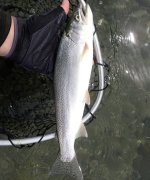
I switched flies and retrieves a couple of time and finally after about two hours I got this little guyon a yellow reverse spider
View attachment 186792
….which was also fekkin’ awesome cuz it’s only the third cutt I’ve connected with in the salt in about 5 or 10 years of half hearted trying
It was a one and done for me as it was getting warmer, brighter, and the wind kicked up….but…yahoo I did it
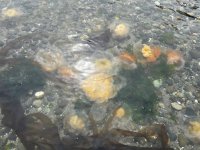
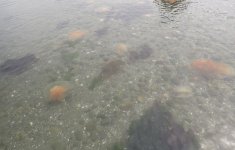
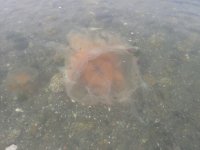
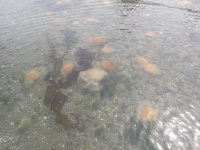
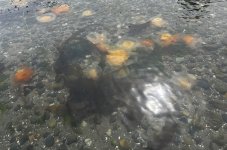
and throughout the morning, I saw a bunch of these things…what are these slow moving creatures?
View attachment 186793

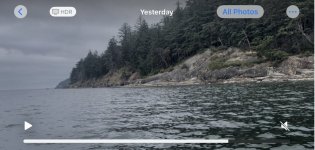
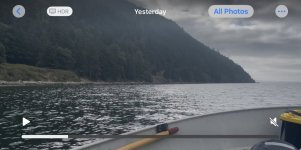 it woulda been a skunker.

Hi SF,
Jellyfish have separate sexes. Individuals either produce clouds of sperm or of eggs. Even though individuals can release tremendous numbers of sperm or eggs, the ocean is a big place. Without aggregation and synchronization, many gametes wouldn't find its opposite number (dilution is a problem). The greatest chances of successful fertilization involve close proximity of adults and synchronous timing of the gamete release. Coral reef corals are known for synchronous spawning triggered by water temperature, lunar cycles, and sunset times (see here and here).
Yes, I do think that you are observing a spawning aggregation (aka,. a bloom) of jellyfish. Typically, local jellyfish synchronously release eggs or sperm at dawn or dusk, probably triggered in part by chemical cues produce by other individuals as well as lunar cues. We are at the first quarter of the current lunar cycle, a time of neap tides (lowest exchange and lowest flow velocity in the lunar month); the third quarter moon also produces neap tides. If you wanted to release gametes into a local area and give the gametes the greatest chance to connect to their opposite number, this is your window. If the gametes were released during the full or new moon (spring tides = greatest exchange and flow velocity), the chances of fertilization would be reduced.
After successful fertilization, the zygote will grow into a planktonic larval stage, the planula. In the case of jellyfish (Scyphozoa) and other members of the subphylum Medusozoa, the growth of the planula typically is supported by nutrients already in the egg and therefore these planula do not feed. When ready, the planula settles onto a hard surface to form a polyp (looks like a tiny sea anemone), the next stage in their complex life history. The first polyp grows asexually into a colony of individuals that look like miniature anemones. Some polyps mature into strobila which bud off a series of miniature jellyfish, called ephyra. These will grow into the mature jellyfish that you are seeing now.
Steve