
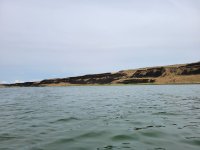
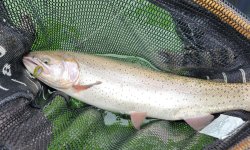
If you've been to this central WA lake, you'll probably recognize it from this photo. There were just 2 of us fly casters out there on this day. The air temperature was in the 79 to 83 degree range. The water temperature was 67 degrees; the Lahontan cutthroats can take the heat better than rainbows, so this is a good summer fishery. There was a heavy algae bloom on the main part of the lake which made it look like pea soup, but I believe that the algae bloom goes down to maybe 6 to 8 feet, and then it is clear water deeper than that. The fish were mostly in the thermocline, about 21 to 26 feet deep, so you have to get your fly that deep somehow. But just because one can spot the fish on the fish finder doesn't mean they are easy to catch. For the first 90 minutes, I didn't have a single hit, but gradually I found the right depth and retrieve to use, and it ended up being a decent day for the Lahontans:
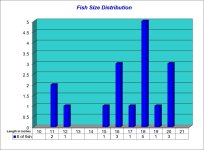
75% of the fish were silvery, but 25% were dark or reddish, but all still fought decently, as far as Lahontans go. None of the fish required reviving. Most looked like they had never been hooked before.
I had the best success casting and stripping a baitfish pattern, although I don't think the particular fly pattern made much difference. As far as I know, there are no baitfish in this lake, except for the Lahontan fry that are planted every year. I think the Lahontans hit the fly out of territorial aggression or just because they are predators and like to chase things that move enticingly in front of their face, much like a household cat will chase inedible, non-natural toys if you move it enticingly enough for them. I've made 62 outings to this lake over the years and have found that many different fly patterns work. I'd recommend using a fly pattern in which you have the most confidence and it should work fine. Getting the depth and retrieve right is more important.
If you go, be sure to take a heavy anchor with plenty of rope. The wind was blowing me off my 18-pound anchor at times, unless I let out a lot of rope so the anchor could dig into the bottom. If the wind gets too strong to make any headway against it, get to the east shore and you can then walk your boat back along the shoreline back to the launch (speaking from personal experience). Also, take some insect repellent and/or a fly swatter for the numerous and pesky deer flies.
Wildlife sightings: On the drive I saw or heard Canada Geese, Ravens, Osprey, Crows, California Quail, Mourning Doves, American Robins, Black-billed Magpies, Killdeer, 2 Raptors, a Red-tailed Hawk, a Belted Kingfisher, Violet-green Swallows, Barn Swallows, Northern Rough-winged Swallows, Pigeons, Starlings, Red-winged Blackbirds, Yellow-headed Blackbirds, Brewer’s Blackbirds, Cedar Waxwings, Song Sparrows, American Goldfinches, House Finches and Horned Larks. Also saw 3 Deer. At the lake I saw or heard Northern Harriers, American Kestrels, Violet-green Swallows, Black-billed Magpies, Red-winged Blackbirds, Yellow-headed Blackbirds, Brewer’s Blackbirds, Eastern Kingbirds, California Quail, Mourning Doves, Ravens, Killdeer, American Coots, Ruddy Ducks, Mallards, Pied-billed Grebes, Rock Wrens, Marsh Wrens, Common Yellowthroats, Song Sparrows and Turtles. The Merlin app also identified by sound the following birds, which I was not able to verify (although Merlin tends to be more accurate than me): Brown-headed Cowbird, Common Grackle, Western Meadowlark, Pygmy Nuthatch, Long-billed Curlew, Eastern Phoebe (?), Western Tanager and House Sparrow.
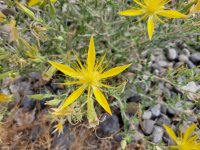
This Blazing Star is one of my favorites of the desert wildflowers. The small parking area is full of these Blazing Stars right now.
Wildflower sightings: On the drive I saw Fireweed, Daisies, Ragwort, Himalayan Blackberries, Spirea, Chicory, Mock Orange, Giant White Hellebores, Mullein, Foxgloves, Western White Clematis, Blazing Star, Mustard, Blanketflower, Yarrow, Vetch, Field Bindweed, Morning Glories, Showy Milkweed, Goat’s Beard, Ocean Spray, Mountain Ash, White Sweet Clover, Yellow Sweet Clover, Toadflax, Fennel, Trefoil, Cow Parsnip, Parsley-flowered Buckwheat, Queen Anne’s Lace and small Sunflowers. At the lake I saw Russian Knapweed, Broad-leafed Pepperweed, Canada Thistles, Penstemons, Yarrow, Mullein, Blazing Star, White Sweet Clover, Narrow-leaved Wirelettuce and Horsebrush.
I'd say that this fishery should remain decent for another 3 weeks or so. After that I think the dissolved oxygen levels in the thermocline drop and the fish don't bite as well and don't fight as much. I wouldn't even try it in August. Mid-June to mid-July is the sweet spot for this fishery.
Rex
