
Navigation
Install the app
How to install the app on iOS
Follow along with the video below to see how to install our site as a web app on your home screen.
Note: This feature may not be available in some browsers.
More options
Style variation
You are using an out of date browser. It may not display this or other websites correctly.
You should upgrade or use an alternative browser.
You should upgrade or use an alternative browser.
What's in your vise?
- Thread starter Billy
- Start date
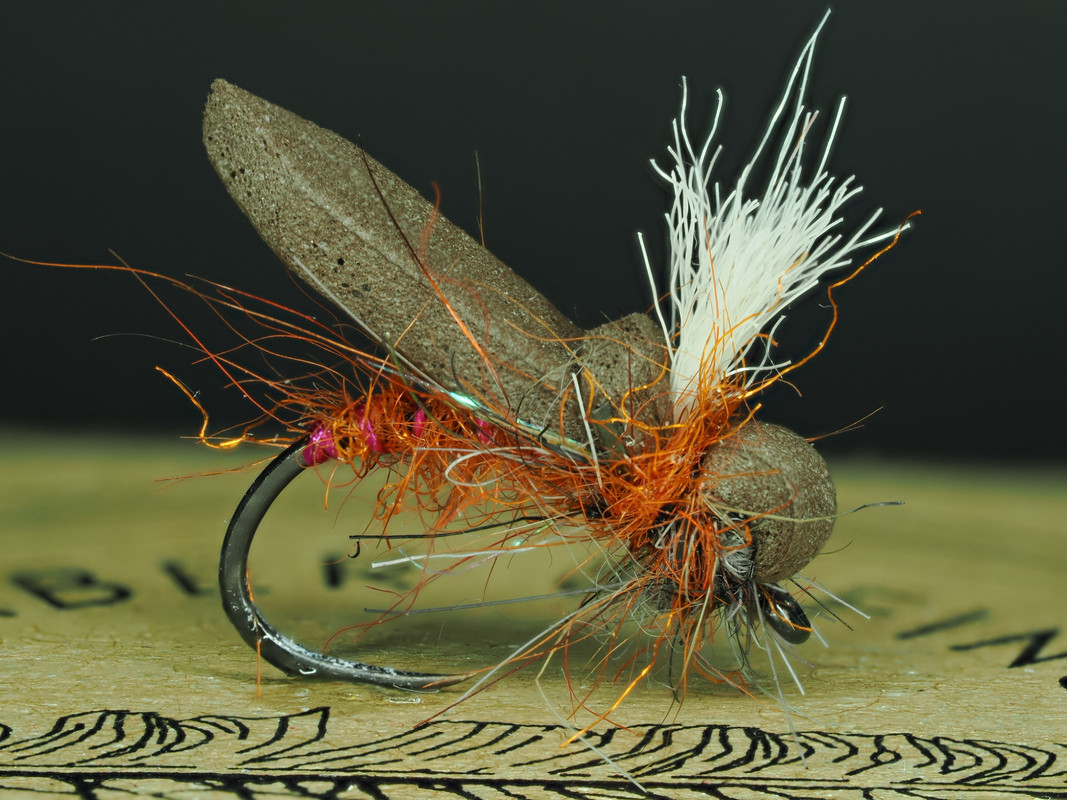

I really like this tie. Do you think it will skitter well?



West Branch Fox

Ten little Adirondack Muddlers. Size 12. Snowshoe foot, rust orange muskrat, and deer hair. Tied for @Gary Knowels 's dry-dropper swap.

Zoran
Life of the Party
I will test it soon and report backI really like this tie. Do you think it will skitter well?

Pale Sulphur

NWFFO
Just Hatched
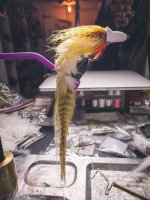
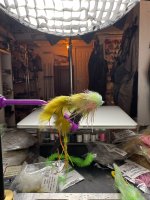
While maybe not in the vise for all these photos, smallie pre-spawn season is upon us, and we are salivating at the mouth for big, nasty eats on these big, nasty flies. Yeah, you can catch 'em on poppers and smaller bugs, but there is something much more enjoyable about watching these articulated patterns jerk through the water column, aggravating and enticing big smallies to violently eat.
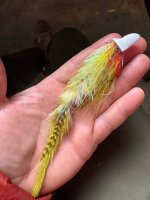
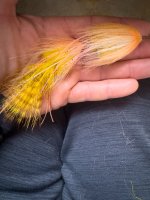
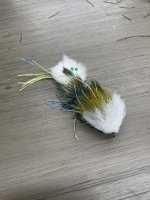
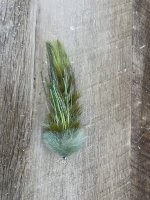

I really like these!


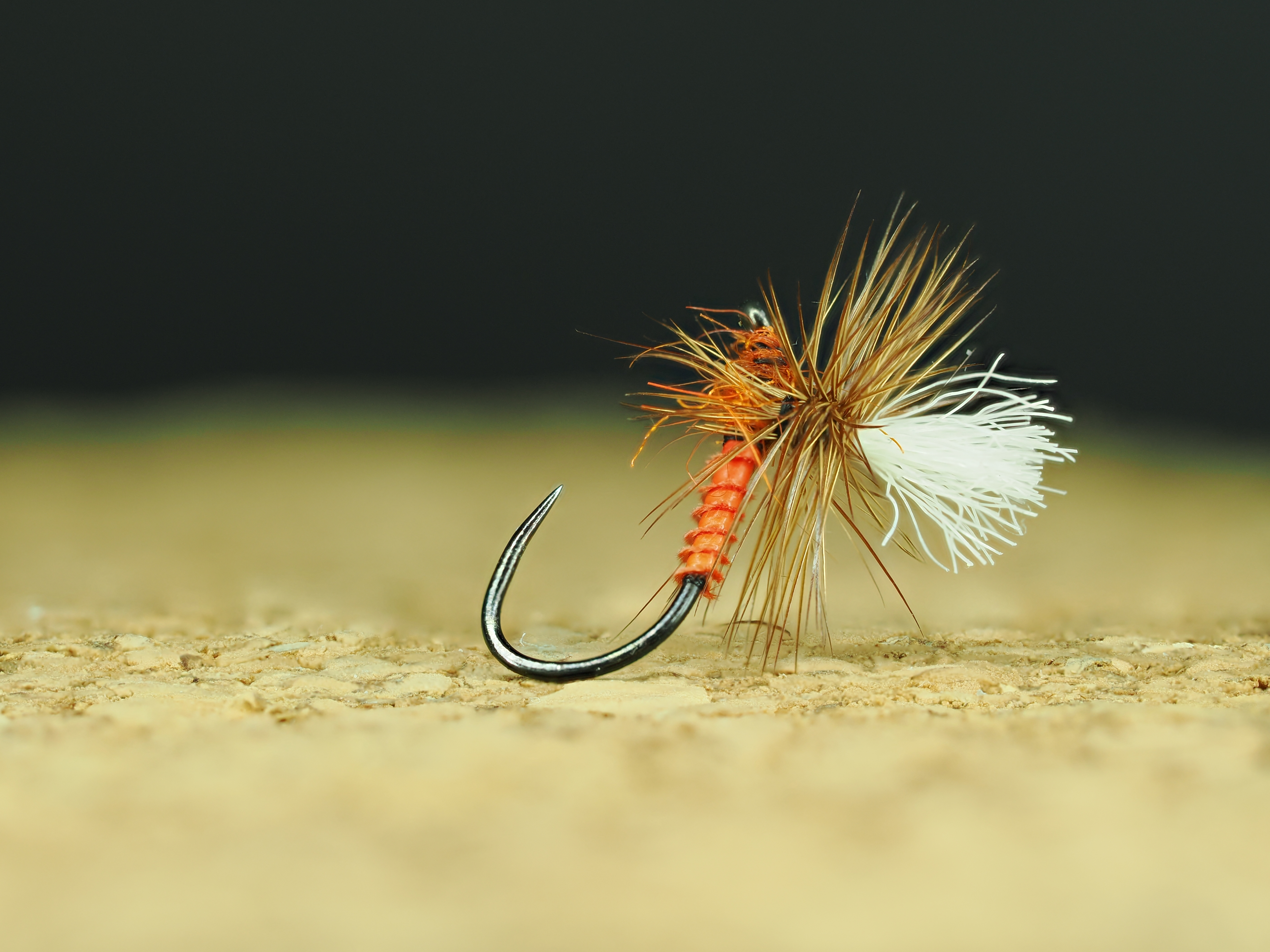

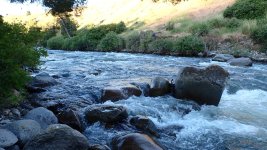
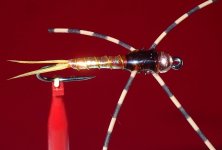
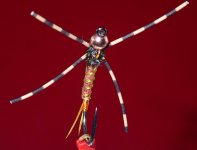
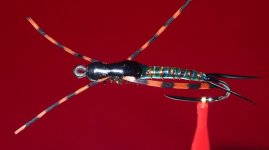
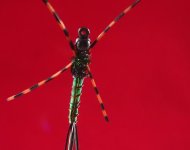
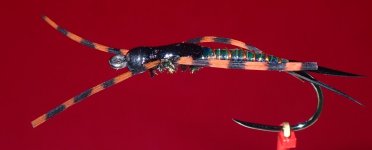
About two decades ago, I was visiting YNP and stopped in Parks Fly Shop to pick up a few flies for the lower Gardner River. It was early summer, and runoff was just tapering off. The lower Gardner is rough and tumble pocket water and the favorite nymphing technique in early season is free lining large stonefly nymphs in the pockets behind boulders and along the edges of the river. At the time, the shop put me on to a very slender pattern that worked extremely well. Don't know if its got another name, but I call it the Slender Stone. The slender profile and tungsten bead gets it deep quick while the mylar body provides a lot of visibility in turbulent water. When I no longer had any in my stash, I went back to Parks several years later to get a few samples, but they no longer carried the pattern.
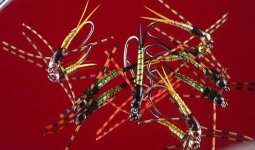
Slender Stone
Hook: Firehole 718 #6, #4
Bead: 3/16" Tungsten
Thread: UTC 140, Black or Brunt Orange
Tail: Black or Yellow goose biots
Body: Saltwater Flashabou
Rib: UTC BR Wire Copper or Yellow
Thorax: Peacock herl
Wing Case: 1/4" Scud back Black or Brown
Legs: Barred rubber or vinyl
Last edited:

Is the entire topside coated in UV cure ? Just the top? Just the thorax forward?View attachment 150745
About two decades ago, I was visiting YNP and stopped in Parks Fly Shop to pick up a few flies for the lower Gardner River. It was early summer, and runoff was just tapering off. The lower Gardner is rough and tumble pocket water and the favorite nymphing technique in early season is free lining large stonefly nymphs in the pockets behind boulders and along the edges of the river. At the time, the shop put me on to a very slender pattern that worked extremely well. Don't know if its got another name, but I call it the Slender Stone. The slender profile and tungsten bead gets it deep quick while the mylar body provides a lot of visibility in turbulent water. When I no longer had any in my stash, I went back to Parks several years later to get a few samples, but they no longer carried the pattern.
View attachment 150733
Slender Stone
Hook: Firehole 718 #6, #4
Bead: 3/16" Tungsten
Thread: UTC 140, Black or Brunt Orange
Tail: Black or Yellow goose biots
Body: Saltwater Flashabou
Rib: UTC BR Wire Copper or Yellow
Thorax: Peacock herl
Wing Case: 1/4" Scud back Black or Brown
Legs: Barred rubber or vinyl
View attachment 150734View attachment 150735View attachment 150736View attachment 150737View attachment 150738
Just the thorax is covered in UV resin. I then cover the thorax and body with Sally Hansen quick dryIs the entire topside coated in UV cure ? Just the top? Just the thorax forward?

Those look terrific! I bet these would be effective in lots of places around here too.View attachment 150745
About two decades ago, I was visiting YNP and stopped in Parks Fly Shop to pick up a few flies for the lower Gardner River. It was early summer, and runoff was just tapering off. The lower Gardner is rough and tumble pocket water and the favorite nymphing technique in early season is free lining large stonefly nymphs in the pockets behind boulders and along the edges of the river. At the time, the shop put me on to a very slender pattern that worked extremely well. Don't know if its got another name, but I call it the Slender Stone. The slender profile and tungsten bead gets it deep quick while the mylar body provides a lot of visibility in turbulent water. When I no longer had any in my stash, I went back to Parks several years later to get a few samples, but they no longer carried the pattern.
View attachment 150733
Slender Stone
Hook: Firehole 718 #6, #4
Bead: 3/16" Tungsten
Thread: UTC 140, Black or Brunt Orange
Tail: Black or Yellow goose biots
Body: Saltwater Flashabou
Rib: UTC BR Wire Copper or Yellow
Thorax: Peacock herl
Wing Case: 1/4" Scud back Black or Brown
Legs: Barred rubber or vinyl
View attachment 150734View attachment 150735View attachment 150736View attachment 150737View attachment 150738