Pacific NW Fly Fishing Museum

Years ago there was a very good fly fishing museum at Granville Island with amazing exhibits but it closed maybe 10+ years ago. I was very sad to see it go.

 
Years ago there was a very good fly fishing museum at Granville Island with amazing exhibits but it closed maybe 10+ years ago. I was very sad to see it go.
It was a very nice little gem of a place. I stumbled on it about thirty years ago and bought a poster that I still have around here somewhere. I’ll see if I can dig it out and share here.
 
A bit off the beaten path here, but if you ever find yourself chasing trout in Tasmania there are two top-notch museums you shouldn’t pass up. During our 2017 trip there we visited both the Salmon Ponds outside of Hobard (home of the Australia Fishing Muesem) and the Australia Fly Fishing Museum in Clarendon. You could as we did spend hours enjoying these places. They set a standard that would be exciting to emulate in the PNW.


The Tassies take their trout fishing seriously.
 
if it's ever real, know where Clackacraft #2 is parked, with a good chance the owner would gift it to such a collection.
Should add, that Clack has taken more King's on the fly then any other craft in the PNW, guarenteed.
 
Last edited:
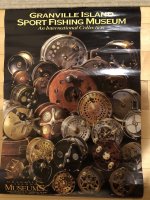
I found the poster from the Granville Island museum in Vancouver BC.
There was an outstanding collection of “mint” condition old fly reels, among others as shown…

View attachment 64511
Greg, that’s such a great poster from a sorely missed place. I wish I could go back in time and visit there again. Back then I had read a lot of the fly fishing classic writers both East Coast and PNW and I had an appreciation for classic gear but my interest and knowledge about classic gear is deeper now and I bet my appreciation for their collections would be even greater now. Thanks for sharing that.
 
I agree Ron. Museums are meant to pique our curiosity and to make us think, and that little place certainly did that for me. It helped me to appreciate the traditions of our sport, and particularly the really cool old gear that was used, especially in our local fisheries.

I was sad to hear that it had closed, but feel fortunate to have stumbled across it. It was pretty amazing.
 
Last edited:
I agree Ron. Museums are meant to pique our curiosity and to make us think, and that little place certainly did that for me. It helped me to appreciate the traditions of our sport, and particularly the really cool old gear that was used, especially in our local fisheries.

I was sad to hear that it had closed, but feel fortunate to have stumbled across i. It was pretty amazing.
Hehehe...while my lovely wife was downright excited to roam around the incredible market at Granville, I was downright excited to visit that museum across the parking lot. It's rare to find such a perfect pairing on earth, LOL.
 
Pre-covid for several years there was a group that formed to attempt to establish a PNW fly museum. They agreed on a general approach, located a potential site, began collecting materials (before they disappeared) and began initial fund-raising efforts. Covid ended that and the effort has lost its momentum. If there is some new blood has an interest in advancing the effort to establish a local/regional fly-fishing museum and willing to invest time in such an effort I suspect the effort could be revived.

curt
 
Four years ago, a group of fly fishers got together and created 501 3c under the Pacific Northwest Museum of Fly Fishing (PNWMFF.org), which still exists and manages a website and a Facebook page. Due to the lack of interest and capital, moving to a brick-and-mortar museum has been slow.
At first, the Snohomish County Parks Dept was willing to let us use the old mill in Oso, Washington, as our headquarters; due to funding, we lost the Mill site to a parking lot.

The Museum rents a 10 x 15 storage unit to house the current collection, and some of its pieces can be seen on Facebook and their website pnwmff.org.


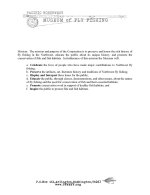
Mission.jpg
 
Here is a little about Western Washington University Special Collection and its fly fishing collection.

Fly Fishing Collection at Western Washington University By Steve Raymond Fly fishers tend to be secretive about their favorite waters, and with good reason; nobody wants to see their favorite places overcrowded or overfished. But there’s a place in Washington State that needs more exposure—the Fly Fishing Collection at Western Washington University in Bellingham, a treasure of Northwest fly-fishing history, art, books and transcripts of interviews with many celebrated Northwest anglers. Much of it is easily accessible from your home computer, and it’s all free. But few people know about it, and it needs more visitors to justify its existence and future development. The heart of the collection, and the most accessible part, is the series of oral histories. Here you can enjoy the reminiscences of many Northwest fly-fishing luminaries, including Alec Jackson, fly tyer, antiquarian and hook manufacturer; Art Lingren, British Columbia fly-fishing historian; Bill McMillan, writer and wild steelhead advocate; Bill Nelson, a founder of the Federation of Fly Fishers; Dave Hughes, Oregon’s prolific angling writer; Frank Moore, owner of Steamboat Inn on the North Umpqua; George McCleod, originator of the Skykomish Sunrise steelhead fly; Gil Nyerges, originator of the Nyerges Nymph; Harry Lemire, tyer of classic Atlantic salmon flies; Henry Hoffman, breeder of genetic hackle; Jim Johnston, Washington biologist who fought for more enlightened fisheries management; Fenton Roskelly, outdoor editor of the Spokane Spokesman Review; Peter McVey, master bamboo rod builder and longtime chef at Corbett Lake County Inn in British Columbia, and many more. All these histories are preserved as easy-to-read printed transcripts of oral history recordings (federal law prohibits access to the original recordings). To access the histories, Google the following words: Fly fishing oral histories at Western Washington University library. From the resulting options, select: Fly Fishing Oral Histories-MABEL Click on that and scroll down to a directory of all the histories (be patient; it usually takes a moment or two for the system to find its way). The Fly Fishing Collection was founded about 20 years ago after a sizeable donation to the university libraries by Paul Ford, retired WWU vice president and provost, and his wife, Mary Ann Ford (Paul also is author of the book Beloved Waters). Their donations, repeated annually ever since, inspired establishment of the collection, and the university enlisted a small advisory group of fly fishers to guide the library’s Special Collections and Archives staff in managing the collection. Since then, in addition to annual donations by Paul and Mary Ann Ford, the collection has acquired book collections from the late David Ishii, owner of a famous bookstore in Seattle’s Pioneer Square; the late Lory Watkins, a well-known collector, and many other individuals. Some of these books are rare and valuable and may be examined only within the secure confines of Special Collections on the sixth floor of the Wilson Library on the WWU campus. However, the donations also included many duplicates, which have been placed in general circulation where they may be checked out under some circumstances by persons unaffiliated with the university (it helps if you’re a resident of Whatcom County). The Fly Fishing Collection also includes artwork and a small selection of fly-fishing artifacts, including an exceedingly rare spiral-built bamboo fly rod made by the late Letcher Lambuth. All these items are in Special Collections, but nearby on the WWU campus is the Center for Pacific Northwest Studies with another treasure of historic collections, including photographs by famous Bellingham steelhead fly fisher and fly tyer Ralph Wahl. Among them are the photos that appeared in Wahl’s classic book, Come Wade the River, along with the inspiring words of author Roderick Haig-Brown. Members of the public may see these items by appointment at Special Collections and Archives in the Wilson Library or at the Center for Pacific Northwest Studies. You can find out how to schedule appointments and what to expect if you visit at: https://library.wwu.edu/access-and-use-collections So consider yourself invited to browse the oral-history transcripts and visit the collections; they both need your attention and support. Western Washington University - 516 High St, Bellingham, WA 9822
 
Not to be windy but I’ll pass on a couple observations. I only went once, sometime mid 90s I think. Cushner was a stamp curator as I recall, but an expert at framing things. Had some remarkable tools and lathes of old in his basement. Precision stuff not made for maybe 100 years. His collection had a lot of bamboo and creels from famous Catskills anglers of the past, exquisitely framed flies from many of them as well as some from west coasters like Lani Waller, and drawers with hundreds of gut (no eye loop) flies still in their sleeves from a famous east coast outfitter (don’t recall name now) that closed their doors in the 60s. It’s in a house he lived in, and I presume his SIL may today. When Cushner retired he moved West to Florence to be near his daughter.
Cushner collection was purchased by the Grandville Island collection which sold a few pieces off and after the fellow passed on, the family donated the remainder to the Atlantic Salmon Museum in Dork Town.
 
Fly Fishers International has some stuff on display in Livingston, MT. They had some items in there from the old days of PNW steelheading.
 
Cushner collection was purchased by the Grandville Island collection which sold a few pieces off and after the fellow passed on, the family donated the remainder to the Atlantic Salmon Museum in Dork Town.
Thanks for sharing that detail...I always wondered what happened to Cushner's collection. (Dork Town????)
 
Back
Top